
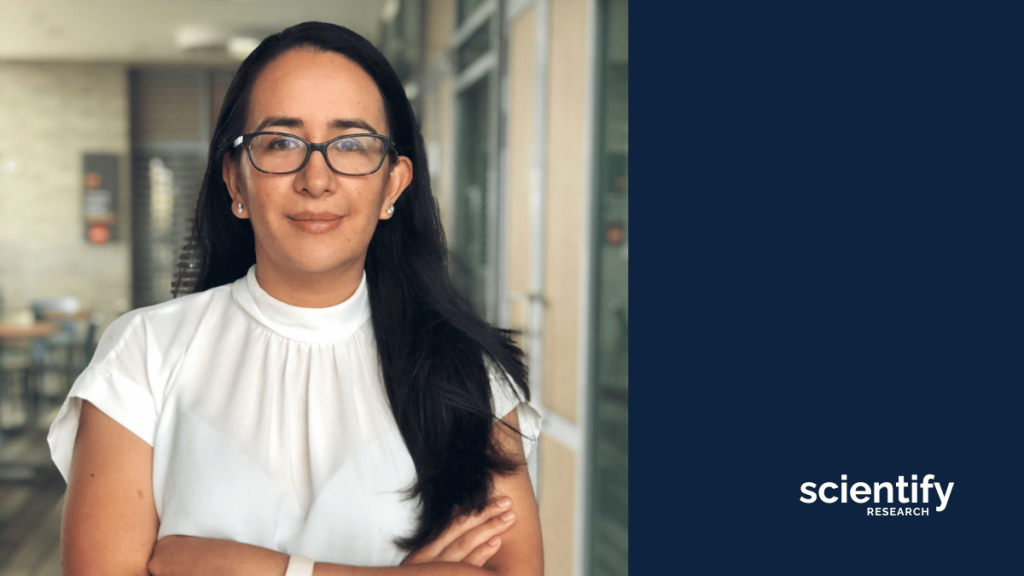
Preface: In this funder perspective interview, we speak with Soraya Husain Talero, Research Director of Fundación WWB Colombia, about the organization’s mission to close the inequality gap for women and advance their empowerment through economic development. If you are a master’s or doctoral student working on social and economic underpinnings of rural women’s experience with entrepreneurship in the Pacific region, this funding may be for you!
Tell me more about Fundación WWB Colombia and your research funding initiatives?
Fundación WWB Colombia is an independent and autonomous organisation with a 44-year track record based in Cali, Colombia. Our mission has been to work toward closing inequality gaps for women and promoting their active participation in economic development. We understand that many of these gaps—regarding access to income, financing, education, networks, and economic participation—are sustained by decisions that do not always incorporate territorial evidence with a gender lens.
Hence, in 2017, we established the Research Fund which is a strategic initiative to bridge inequality gaps through knowledge. We finance applied, participatory, and collaborative research in the Colombian Pacific, aiming to generate situated evidence that fosters dialogue, drives advocacy, and achieves meaningful social transformation.
How many grants do you give out annually?
The Research Fund annually awards between 8 and 20 funding slots for research projects conducted with communities in the Colombian Pacific region. This conditional support can be directed toward Fieldwork Support (ATC) or Research Capacity Building (FCI) through applied, participatory, and collaborative research.
This year marks the launch of our 10th Call for Proposals, titled ‘Hilando conocimiento, tejiendo transformación, en la Región Pacífico’ (Spinning Knowledge, Weaving Transformation in the Pacific Region). For this cycle, we are offering 8 slots for research projects (field work support) by Master’s and Doctoral students from Colombian and universities worldwide. The call will remain open until the 31st of May.
Exactly what type of researchers and research are you looking to fund?
In the framework of the Research Fund’s 10th Call for Proposals, we finance projects from Master’s and Doctoral students who are conducting their work within the territories of the Pacific region. We seek rigorous researchers with ethical clarity and a deep commitment to the territory—scholars who understand that research is not merely about producing a thesis, but about generating actionable knowledge to bridge structural gaps.
We prioritize projects closely aligned with our mission: entrepreneurship, women’s economic autonomy, the care economy, financial inclusion, vulnerable populations, and sexual and reproductive health. We support both applied and participatory-collaborative research, always through a gender lens and with the potential for real-world impact.
Which of your grants are available globally, and how do you engage the global research community?
Our calls for proposals are geographically focused on the Colombian Pacific region; however, students from universities across Colombia and worldwide are eligible to apply, provided their research is conducted within these territories and in Spanish.
While this specific call is tailored to students, we believe in the importance of sustaining continuous dialogue with the entire national and international academic community. Therefore, we invite researchers and institutions to contact us if they have ideas for strategic alliances, joint research projects, or knowledge-exchange spaces. We are convinced that local challenges regarding inequality and gender are deeply enriched by regional and global conversations.
Could you please explain the research initiatives in the context of the larger umbrella organization? Could you please also tell us more about your role with Fundación WWB Colombia?
The Research Fund is Fundación WWB Colombia strategic platform for driving gender-focused knowledge that anticipates structural challenges and strengthens women’s economic autonomy. As the Director of Research, my work integrates the design and execution of research projects centered on gender, development, entrepreneurship, and understanding of contexts.
We actively promote the generation, dissemination, and appropriation of knowledge as a core strategy to reduce and mitigate the inequality gaps affecting women. This involves fostering diverse research models, including in-house projects, collaborative efforts with third parties, and initiatives conducted through external partners.
We operate under the firm conviction that rigorous research generates the necessary evidence to drive meaningful and lasting social transformations. Furthermore, our research contributes directly to the regional competitiveness of the Colombian Pacific. We recognize the profound paradox of territories like Chocó—one of the most biodiverse regions on the planet, yet one of the most impoverished.
By generating situated knowledge, we aim to unlock the region’s potential and address these structural imbalances. Finally, we also aim to bridge the gap between academia, local territories, and public advocacy with a forward-looking, transformative approach.
How are the applications evaluated? Tell us more about the evaluation process.
Proposals undergo a rigorous evaluation process that begins with a compliance screening to ensure all terms of reference are met. This is followed by a technical assessment that analyzes territorial relevance, gender lens, methodological rigor, and ethics—whether applied, participatory, or collaborative—as well as feasibility and impact potential. Subsequently, proposals are reviewed by a panel of academic experts specialized in our thematic lines. The final selection is merit-based, focusing on coherence and transformative capacity.
What is the expected value that the selected researchers will generate?
We expect our researchers to serve as catalysts for transformation, generating value that transcends traditional academic boundaries. By leading applied, participatory, and collaborative research, they bridge the gap between theory and territory.
We look for researchers who will:
- Generate relevant evidence: Produce rigorous, gender-responsive, and situated evidence that deconstructs structural inequalities, specifically those hindering women’s economic autonomy and the full exercise of their rights.
- Empower Local Territories: Foster the appropriation of knowledge by embedding research capabilities within the community and mentoring local researchers
- Shape Policy: Provide high-relevance inputs that guide institutional decisions and inform the design of inclusive policies and social programs.
- Strengthen the Scientific Ecosystem: Contribute to closing educational gaps and advancing research excellence by producing high-impact scholarly work that elevates the visibility of the region.
Ultimately, the value generated is strategic and advocacy-oriented. Our researchers do not just produce a thesis; they build a collaborative bridge between academia, grassroots communities, and the public and private sectors to drive systemic social change.
What advice do you have for researchers interested in applying for this funding?
We advise applicants to design proposals that are deeply connected to the Colombian Pacific, demonstrating a clear understanding of the context and authentic engagement with local actors. Proposals should coherently integrate a gender lens and, where applicable, use participatory or collaborative methodologies that promote the co-construction of knowledge.
Finally, researchers should clearly project the impact of their work beyond the academic product, focusing on institutional and community strengthening and the generation of evidence.
Are your funding opportunities on a regular annual schedule?
The Fund operates on a yearly basis, with opening dates that may vary according to institutional planning and the strategic priorities defined for each year. This year, we are proud to launch our 10th Call for Proposals.
If so, does the scope change from year to year?
The Fund is anchored by two complementary modalities designed to drive our research strategy in the Colombian Pacific: one supporting graduate students in their territorial fieldwork, and another empowering research groups to foster collective capacity building. While our operational focus adapts to the strategic priorities of each institutional cycle, our mission remains steadfast.
Our work is built upon three unwavering pillars: 1) Core Thematic Areas: Entrepreneurship, financial inclusion, women’s economic autonomy, the care economy, sexual and reproductive health, and vulnerable populations. 2) Methodological Rigor: A permanent gender-responsive perspective. 3) Community involvement: The active involvement of local communities as co-creators in the research process.
Acknowledgments:
We would like to express our sincere gratitude to Soraya Husain Talero, for taking the time to share her perspectives with us, as well as to Fundación WWB Colombia, for their important contribution to both understanding the social and economic dynamics affecting rural women in this region. We appreciate their commitment to research that builds capacity and makes a material contribution to women’s empowerment.