
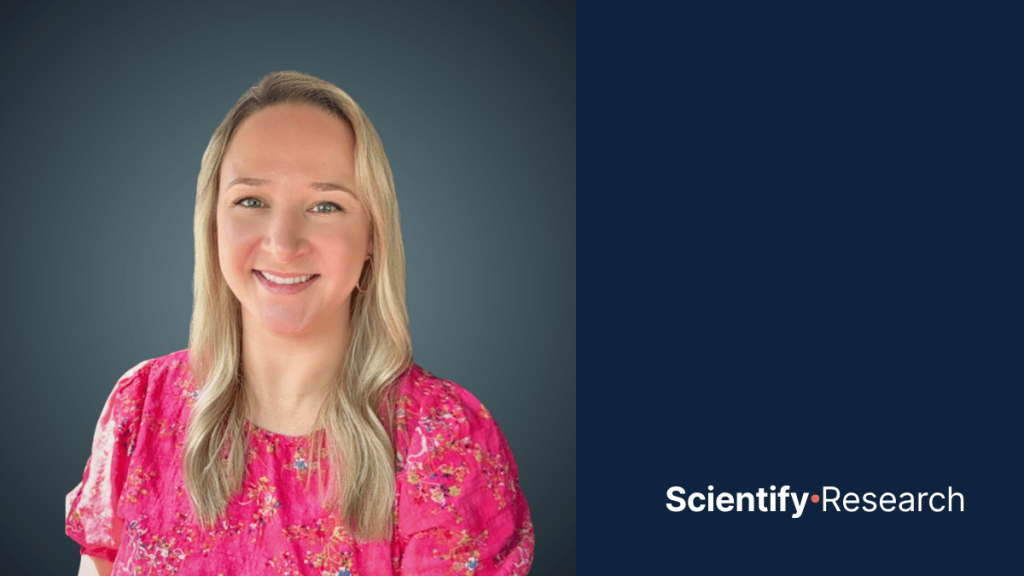
Preface: In this interview, we speak with Emily Amerson, President of CTNNB1 Connect & Cure on funding CTNNB1 Syndrome research. Here she tells us about the organization’s history and research strategy, as well as her views on the role of philanthropic funding in rare disease research more broadly.
Give us a short history of CTNNB1 Connect & Cure. When was it founded, and what are its goals?
In 2017, CTNNB1 Syndrome Awareness Worldwide (CSAW) was founded as the first nonprofit dedicated to CTNNB1 Syndrome, at a time when only about 30 total cases were known worldwide. CSAW focused on raising awareness, providing education and resources, and building a connected community for individuals and families affected by CTNNB1 Syndrome.
During its early years, CSAW established several foundational initiatives that remain important to the CTNNB1 community today, including launching a dedicated website, adopting the dragonfly as the community symbol, establishing July 25 as CTNNB1 Syndrome Awareness Day, and creating regular opportunities for families to connect and share information.
As awareness of CTNNB1 Syndrome grew, the need to accelerate research and treatment development became increasingly clear. In 2019, Advancing CTNNB1 Cures & Treatments (ACCT) was founded with a specific focus on research. ACCT developed key relationships with leading researchers in the field, including Wendy K. Chung, MD, PhD, Chief of Pediatrics at Boston Children’s Hospital and Mary Ellen Avery Professor of Pediatrics at Harvard Medical School, and Michele H. Jacob, PhD, Professor of Neuroscience at Tufts University School of Medicine. ACCT also helped fund the development of the CTNNB1 mouse model at Tufts University, providing an important foundation for understanding the biology of CTNNB1 Syndrome and advancing potential treatments.
CSAW and ACCT continued to work alongside one another, organizing virtual conferences and creating opportunities for families, researchers, and clinicians to connect. Recognizing that we shared the same ultimate goal and that our combined efforts could have a greater impact, CSAW and ACCT merged in 2023 to become CTNNB1 Connect & Cure (CCC). Today, CCC brings together the strengths of both organizations: building a connected and informed community while accelerating research toward meaningful treatments and, ultimately, a cure.
What is your background and role at CTNNB1 Connect and Cure?
My background is in mathematics and education. I have bachelor’s degrees in Secondary Education and Mathematical Sciences, as well as a master’s degree in Mathematical Sciences. My connection to CTNNB1 Syndrome, however, is deeply personal. My daughter, Savannah, was diagnosed with CTNNB1 Syndrome in 2022.
That diagnosis changed the direction of my life and gave me a very personal understanding of what it means to receive a diagnosis for a rare condition where there is still so much we don’t know. Like many families, we had questions about what the diagnosis meant for her future, what treatments might be possible, and where to turn for reliable information and support.
I currently serve as President of CTNNB1 Connect and Cure. My role spans organizational strategy, research engagement, fundraising, partnerships, communications, and community development. A significant part of my responsibility is bringing together families, researchers, clinicians, industry partners, and donors so that we can work toward the same goal.
Ultimately, being both a parent in the CTNNB1 community and the leader of the organization gives me a very strong sense of responsibility that I do not take lightly. I understand that the decisions we make have real consequences for families who are navigating a diagnosis they never expected and a future that is still largely unknown. That perspective keeps me grounded in why this work matters. It pushes me to ask hard questions, be thoughtful about how we invest our resources, and make sure that the work we support moves us closer to meaningful change. I feel a responsibility not only to the families living with CTNNB1 today, but also to the families who will receive this diagnosis years from now.
What have families and individuals affected by CTNNB1 Syndrome taught you about where the organization should focus its efforts?
Families have taught us that research and patient support cannot be separated. Families want treatments and a cure, but they also need support on their journey in the meantime. This includes better information, better clinical care, better access to knowledgeable providers, a community that understands what they are experiencing, and opportunities to participate in research.
Families may go years without meeting another person who truly understands what they are experiencing. Finding that community can provide reassurance, understanding, practical support, and a sense that they are not navigating this journey alone. We also hear from families about the tremendous variability of CTNNB1 Syndrome. No two individuals are exactly alike, and their experiences help us recognize where there are gaps in our scientific and clinical understanding. Those lived experiences are important not only in shaping research priorities, but also in helping families connect around the challenges and successes they share.
Ultimately, families have shown us that we need to create meaningful change both today and for the future. We need to advance research toward treatments and a cure, while also building a strong, connected community where every family affected by CTNNB1 Syndrome feels seen and knows that they belong.
What types of CTNNB1 Syndrome research projects or investigators are you hoping to support through your program, and what led to these projects becoming a strategic priority?
Our research strategy is intentionally focused on one overarching goal: accelerating the development of treatments for CTNNB1 Syndrome. We prioritize research that can directly advance our understanding of how reduced CTNNB1 function causes disease and, most importantly, identify ways to restore, replace, or compensate for that lost function.
Within this framework, we are building and growing a connected research ecosystem designed to move from understanding CTNNB1 biology to developing and testing potential treatments. This includes identifying and validating therapeutic targets, discovering and repurposing drugs that may modify the underlying biology, and developing preclinical models that can help us understand disease mechanisms and reliably evaluate potential therapies. We are also advancing therapeutic approaches such as a novel small molecule, RNA-based strategies, and other methods that could restore or compensate for reduced CTNNB1 function.
Our strategy also considers the broader CTNNB1 therapeutic landscape, including programs and preclinical studies led by other academic, nonprofit, and industry groups that we do not directly fund or manage. This includes the advancement of gene therapy into clinical development, as well as additional preclinical approaches being explored across the field. These efforts provide important information about CTNNB1 biology, therapeutic opportunities, remaining gaps, and the resources needed to support successful treatment development. By understanding how our investments fit within this broader landscape, we can direct our resources toward areas where they can add the greatest value, complement rather than duplicate other efforts, and help build a diverse pipeline of potential treatments.
At the same time, we are building the foundational infrastructure needed to make that therapeutic pipeline possible. Natural history data, biomarkers, patient-derived samples, disease models, and other research resources are not endpoints in themselves; they are interconnected tools that strengthen every stage of the process. They help us understand how CTNNB1 Syndrome affects individuals over time, identify meaningful biological and clinical measures, test potential treatments in relevant systems, and ultimately determine whether a therapy is working. By intentionally connecting these areas of research, we can create an ecosystem in which each study and resource informs the next. By reducing duplication and filling critical gaps, we are making it faster and more efficient to move promising discoveries toward clinical development.
When evaluating a research opportunity, we consider several factors: Does it address an important gap in our understanding of CTNNB1 biology? Does it have a credible path toward therapeutic development? Does it generate a tool, model, dataset, or discovery that can enable the next step? Is the approach scientifically rigorous and feasible? And can our philanthropic funding accelerate work that might otherwise take significantly longer to advance? This allows us to be strategic about where we invest rather than simply funding research because it is related to CTNNB1 Syndrome.
Tell us more about what makes for a particularly strong, fundable application for one of your CTNNB1 Syndrome research grants?
A strong application starts with a compelling scientific question that is clearly connected to CTNNB1 Syndrome and has the potential to move the field forward.
We look for scientific rigor, a strong rationale, appropriate methodology, and investigators who have the expertise and resources necessary to execute the proposed work. We also want applicants to clearly explain what their project will accomplish, what the next steps will be if the work is successful, and how the research could ultimately contribute to better outcomes for individuals with CTNNB1 Syndrome.
Because we are a patient-driven organization, relevance to patients matters tremendously. We want to understand not only whether a project is scientifically interesting, but why it matters for CTNNB1 Syndrome and how it fits into the broader research landscape.
We also value collaboration. In a rare disease, resources and expertise are limited, so projects that leverage existing patient data, biological samples, models, or collaborations can have tremendous value.
What does success look like for a CTNNB1 Syndrome research grant, both in the short term and over several years? How do you measure this impact?
Success looks different depending on the type and stage of a project. In the short term, success may mean generating new data, validating a model, identifying a potential therapeutic target, developing a biomarker, establishing a research resource, or answering an important biological question. We also look for whether the project produces something that enables the next stage of research.
Over several years, we want those individual pieces to build toward a larger objective: treatments that can meaningfully improve the lives of people with CTNNB1 Syndrome.
We measure impact through scientific outputs and, ultimately, through progress toward translation. That can include publications, new collaborations, additional funding, new research tools or datasets, therapeutic candidates, follow-on studies, and movement toward clinical testing.
In your view, what role does philanthropic funding play in moving rare-disease research forward, particularly in areas that may receive limited traditional funding?
Philanthropy can be uniquely powerful in rare disease because it can move quickly and take strategic risks that traditional funding mechanisms may not always be able to take.
For a condition as rare as CTNNB1 Syndrome, the number of patients—and therefore the traditional market or funding incentive—can be small. That can make it difficult to attract researchers, pharmaceutical investment, or large-scale government funding, particularly for early-stage or highly disease-specific work.
Patient organizations can help change that equation. We can identify important gaps, bring together researchers and resources, generate patient data and biological samples, fund early-stage research, and demonstrate that there is a community ready to support the development of treatments.
Our goal isn’t for philanthropy to replace NIH, industry, or other traditional funding. It’s to de-risk and accelerate the science so that additional investment becomes possible. A relatively small philanthropic grant can sometimes create the preliminary data or research resource necessary to unlock a much larger opportunity.
What impacts are you most proud of CTNNB1 Connect and Cure having made so far?
What I am most proud of is how far this community has come, not just in size, but in its sense of connection, purpose, and possibility. When CTNNB1 Syndrome was first identified, families were often isolated, trying to understand a diagnosis that even many medical professionals had never heard of. Today, families around the world know that they are not alone. They have a community to turn to, opportunities to connect with one another, access to information, a growing network of researchers and clinicians who understand that their experiences and needs matter, and multiple therapeutic approaches in the pipeline. That sense of belonging and collective hope is something I am incredibly proud of.
I am also proud of how much we have raised the level of professionalism in the CTNNB1 space. We have grown from a small group of parents trying to figure out what was possible into an organization that can engage seriously with researchers, clinicians, institutions, funders, and industry. We have invested significant resources into research, built relationships with leading investigators, helped create critical research tools and resources, and become a credible partner in advancing the field.
For me, those two things are deeply connected. We have built an engaged community that is willing to drive the science forward and an organization professional enough to turn that collective effort into meaningful progress. There is still an enormous amount of work ahead, but we have evolved into an organization with a real seat at the table. We are helping shape the research questions, priorities, and resources that will determine what comes next for CTNNB1 Syndrome. We have gone from families searching for answers to a community with the credibility and voice to help shape those answers and truly change the future for our patient community.
How do patient and family priorities influence the research projects you choose to fund in the next years’ grant cycles?
Patient and family priorities are central to our research strategy. We don’t want to fund research simply because it is scientifically interesting; we want to understand how the work fits into the needs of people living with CTNNB1 Syndrome.
Families help us identify areas where the current medical and scientific knowledge is inadequate. Their experiences help us understand which symptoms and challenges have the greatest impact on daily life and where better treatments could make the greatest difference.
At the same time, we recognize that patients aren’t always able to identify the specific scientific pathway that will ultimately lead to a treatment. That’s where the partnership between the patient community and scientific experts becomes important. Families help define the problems and priorities, while researchers help identify the most promising scientific paths to address them.
Our responsibility is to bring those perspectives together and invest in research that has both scientific merit and meaningful potential for patients.
Looking ahead, where would you like to see CTNNB1 Connect and Cure going in the next five to ten years?
Over the next five to ten years, I want to see CTNNB1 Connect & Cure help move the field from hope to real options. That means multiple treatment approaches that are available to families, clear standards of care so that every child can receive the best possible support, and a stronger, more connected global community. Ultimately, I want a future where a CTNNB1 diagnosis comes with answers, treatment options, and a comprehensive network of medical, research, therapeutic, and community support ready to help every family from day one.
Acknowledgements
We sincerely thank Emily for taking the time to share about the research strategy and impact of CTNNB1 Connect & Cure. We sincerely appreciate the way the foundation integrates patient and family priorities as they work to make sure that treatment options are developed for children living with CTNNB1 Syndrome.