
Estimated reading time: 5 minutes
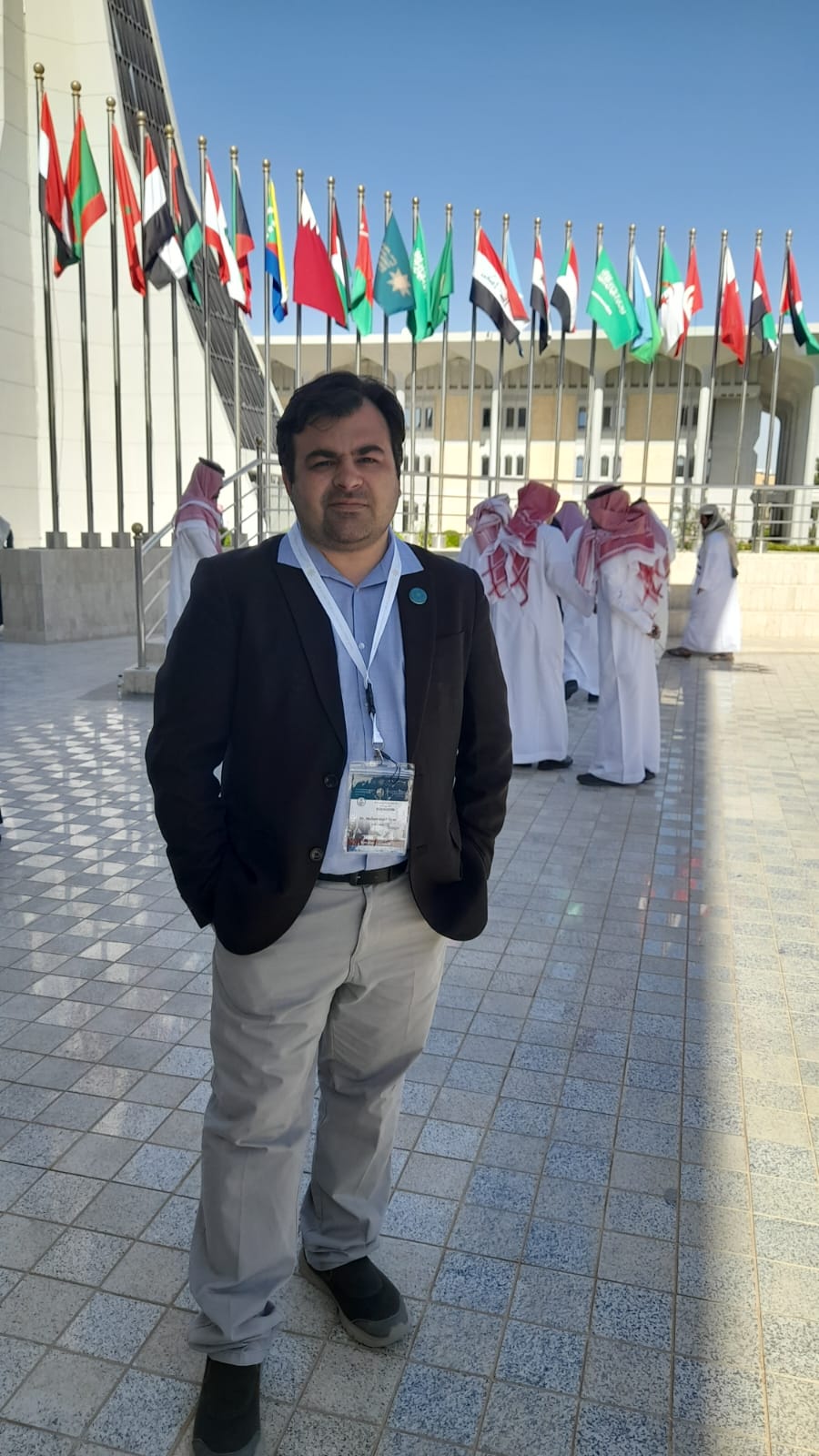
Preface: This essay by Muhammad Ilyas from Islamia College University Peshawar, Pakistan is one of ScientifyResearch’s inaugural Rare Disease Science Communication Award entries.
People often think of rare diseases affect only a few scattered families globally. But in the Swat Valley (once known as the ‘Udyana’ of ancient times and later a princely state) of northern Pakistan, my home, they are heartbreakingly common. Here, among breathtaking mountains and close-knit communities, cousin marriages quietly increase the prevalence of inherited neurological disorders. Diseases, globally considered “rare,” are heartbreakingly familiar to many families in my valley or globally rare diseases are heartbreakingly familiar to many families in my region.
Growing up in Swat, I saw this reality up close. I saw children who slowly lost their ability to walk, talk, or see. I saw suffering parents who loved them fiercely, had no clue why their children were suffering. What shattered me even more was that families, instead of seeking medical care, turned to folk healers, saints, and spiritual remedies. It wasn’t their ignorance; it was that modern medical facilities were distant, unaffordable, or not trusted.
Years later, after studying genetics and genomics at Harvard Medical School, University College London, and KRIBB South Korea, I returned to my home region with a renewed purpose. I aimed to introduce modern genetics to people who had been excluded from scientific progress. I wanted to demonstrate that their struggles and diseases mattered, and that science could provide clarity where there had only been fear and helplessness.
One of the first families I encountered on this mission was not strangers; they were my neighbors. This family had three young adults (two men and a woman) who shared a heartbreaking pattern of symptoms. As children, they had been bright and active. But as they grew older, each one began to change.
They lost their coordination. Their muscles weakened and wasted away. Their vision dimmed. Walking became difficult, then impossible. Two of them were bedridden by their teens. The family believed it was a curse, possibly a punishment, or an evil spirit. They had tried every spiritual remedy they could find.
Watching them suffer was painful; convincing them to undergo scientific testing was even harder. Asking for blood samples felt intrusive in a community where privacy is sacred, and trust must be earned slowly. But after many conversations, and after they saw that I was not just a researcher but also someone who deeply cared for them, they agreed. Those samples became the start of something bigger than all of us.
Back in our genomics research laboratory in Peshawar, we used whole exome sequencing, a powerful technology that scans all the protein-coding genes in the body. Among more than 100,000 genetic variants in each patient, one stood out: a mutation in the GALC gene, which encodes an enzyme essential for protecting the brain. This mutation, c.449C>T (p.Pro150Leu), had never been reported anywhere in the world.
When the GALC enzyme malfunctions, a toxic lipid called psychosine build up, destroying the cells that produce myelin, the protective sheath around nerves. Without myelin, the brain’s communication network breaks down. This condition is known as Krabbe disease, a devastating neurodegenerative disorder considered extremely rare globally.
But in Swat, because cousin marriages are common, the likelihood of inheriting such recessive mutations is much higher. The disease had silently devastated families for decades, yet had never been diagnosed, documented, or understood.
Using computational modeling and molecular dynamics simulations, we found that this seemingly small genetic change destabilizes the GALC enzyme’s structure. It interferes with how the enzyme folds, how it moves, and how it interacts with its natural substrate. In short, this mutation cripples the protein’s function. For the first time, the family had an answer, not superstition, not a curse, just a biological reason.
Finding a new pathogenic mutation may sound like a small step, but for rare diseases, every such discovery is transformative. It enables accurate diagnosis where none existed. It allows carrier testing for extended families. It contributes valuable data to global research efforts. And it opens the door to future gene therapies being tested worldwide. Our work also changed something beyond science; people’s perceptions.
The family who bravely participated became advocates for medical genetics in their community. Their experience encouraged others to come forward, helping break cultural barriers that had previously blocked scientific care.
From a Single Family to a Regional Mission
What began with one family has now grown into one of Pakistan’s most ambitious rare disease genomics projects. Encouraged by the initial breakthrough, the Government of Pakistan awarded me two research grants to expand this work across the northwestern region. Since then, our team has studied more than 300 families, uncovering a spectrum of rare neurological and neurodevelopmental disorders, many caused by novel mutations previously unreported.
Our efforts also caught the attention of the international scientific community. We joined the GREGoR Consortium (Genomics Research to Elucidate the Genetics of Rare Diseases), a global network advancing cutting-edge rare disease genomics. Additionally, our group has been integrated into the SYNaPS Project at University College London (UCL), a landmark initiative exploring the genetic causes of synaptic and neurological disorders. Through these collaborations, families in the remote mountains of Pakistan, once invisible to science, are now contributing to global discoveries.
A Hopeful Future for Rare Diseases in Swat
Our study on Krabbe disease was the first of its kind in this region, but it was only the beginning. Each mutation we document, each family we counsel, and each collaboration we build strengthens the scientific bridge between the valleys of Swat and the wider world of rare disease research. In a place where these disorders are not rare at all, this knowledge is more urgently needed.
For me, this work is more than a scientific mission. It is a personal responsibility to honor the resilience of my people, to ensure their suffering is understood, and to help create a future where preventable or diagnosable genetic diseases no longer trap children in Swat.
In the quiet villages of the Swat Valley, rare disease research is not abstract.
It is personal.
It is urgent.
And most importantly, it is filled with hope.