
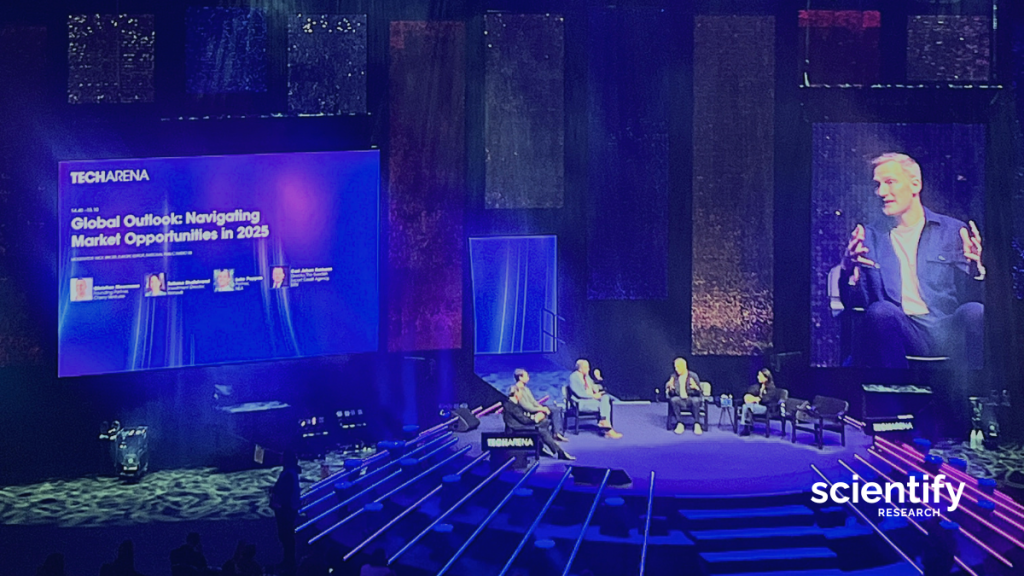
Earlier this year, I had the opportunity to attend Techarena 2025, a dynamic conference centered around the theme “Becoming the Best in the World.” While not designed specifically for the research community, the event brought together thought leaders from business, sustainability, policy, culture, and technology – offering valuable cross-sector insights into what it takes to lead, innovate, and adapt on a global stage.
For researchers, research managers, and funders, these discussions offer critical perspective. They remind us that excellence in science and innovation doesn’t happen in a vacuum. It’s shaped by collaboration, resilience, and a willingness to embrace change – qualities shared across high-performing industries.
Here are five takeaways from the event that stood out – and why they matter for the future of research and funding:
1. AI and Data Infrastructure: The Backbone of Future Research
AI and data infrastructure are not just transforming industries—they are revolutionizing how research is conducted. AI-powered data management and predictive analytics can streamline research processes, enabling researchers to work more efficiently and make data-driven decisions. For funders, this means investing in projects that explore data-sharing mechanisms and AI-driven solutions, particularly those focused on collaborative ecosystems. Researchers and research managers should ensure that their projects are leveraging AI to stay ahead of the curve.
2. Human Enhancement and Ethical Considerations: A New Frontier in Research
Nicklas Hermansson’s session on “Humans 2.0” explored the future of human enhancement driven by AI and humanoid technologies. While the potential to improve human capabilities through AI and medical innovations is vast, it also raises ethical concerns, such as inequality and job displacement. Researchers should explore these ethical implications, ensuring that enhancements are equitable and inclusive. For funders, this signals the need to support projects that integrate responsible innovation in human enhancement.
3. Inclusive Tech: The Competitive Advantage of Gender Equality and Social Justice
The session on “Just?Tech” highlighted how crucial it is to embed inclusive design principles in tech development. AI technologies that address gender biases or social inequalities are not only more ethical – they can provide a competitive advantage. Researchers should prioritize projects that promote social justice and inclusivity in their tech solutions. For funders, this means backing initiatives that foster diversity in innovation, ensuring that tech developments benefit all members of society.
4. Sustainability and Traceability: Preparing for the Green Transition
Sustainability continues to be a significant concern in both business and research. A session on sustainable innovation emphasized the importance of traceability in supply chains, such as implementing digital product passports. Researchers working on sustainability should prioritize transparent, traceable data in their projects, aligning with the EU’s push for a circular economy. Funders should focus on initiatives that integrate these principles, preparing for the green transition and ensuring compliance with future regulations.
5. Collaborative Innovation: Networking Across Sectors for Greater Impact
Jon Olsson’s transition from pro-skier to entrepreneur underscored the importance of collaboration and networking in achieving success, both in sports and business. The same applies to research. Cross-sector collaborations can unlock new research possibilities and lead to impactful innovations. Research managers should encourage interdisciplinary partnerships and ensure their teams are working with a diverse range of stakeholders. Funders should support projects that foster collaboration between academia, industry, and startups to drive groundbreaking research.
Final Thoughts
The insights shared at the event highlighted the immense potential of AI, human enhancement, and inclusive tech in shaping the future of research and innovation. As researchers, it’s essential to stay ahead of these technological advancements and consider their ethical, societal, and environmental implications. For funders, the opportunity lies in supporting projects that not only drive scientific progress but also promote inclusivity, transparency, and sustainability. By fostering collaboration and responsible innovation, we can ensure that the future of research benefits everyone.
About the Author
Caroline Rwandalla is a skilled Content Producer and Digital Marketing Professional with a background in Computer Information Systems and Security. She is passionate about all things digital, media, and technology, and enjoys exploring how emerging innovations shape the way we work, communicate, and connect. With a keen eye for storytelling and an understanding of digital ecosystems, Caroline brings insightful perspectives to the intersection of technology and human experience.