
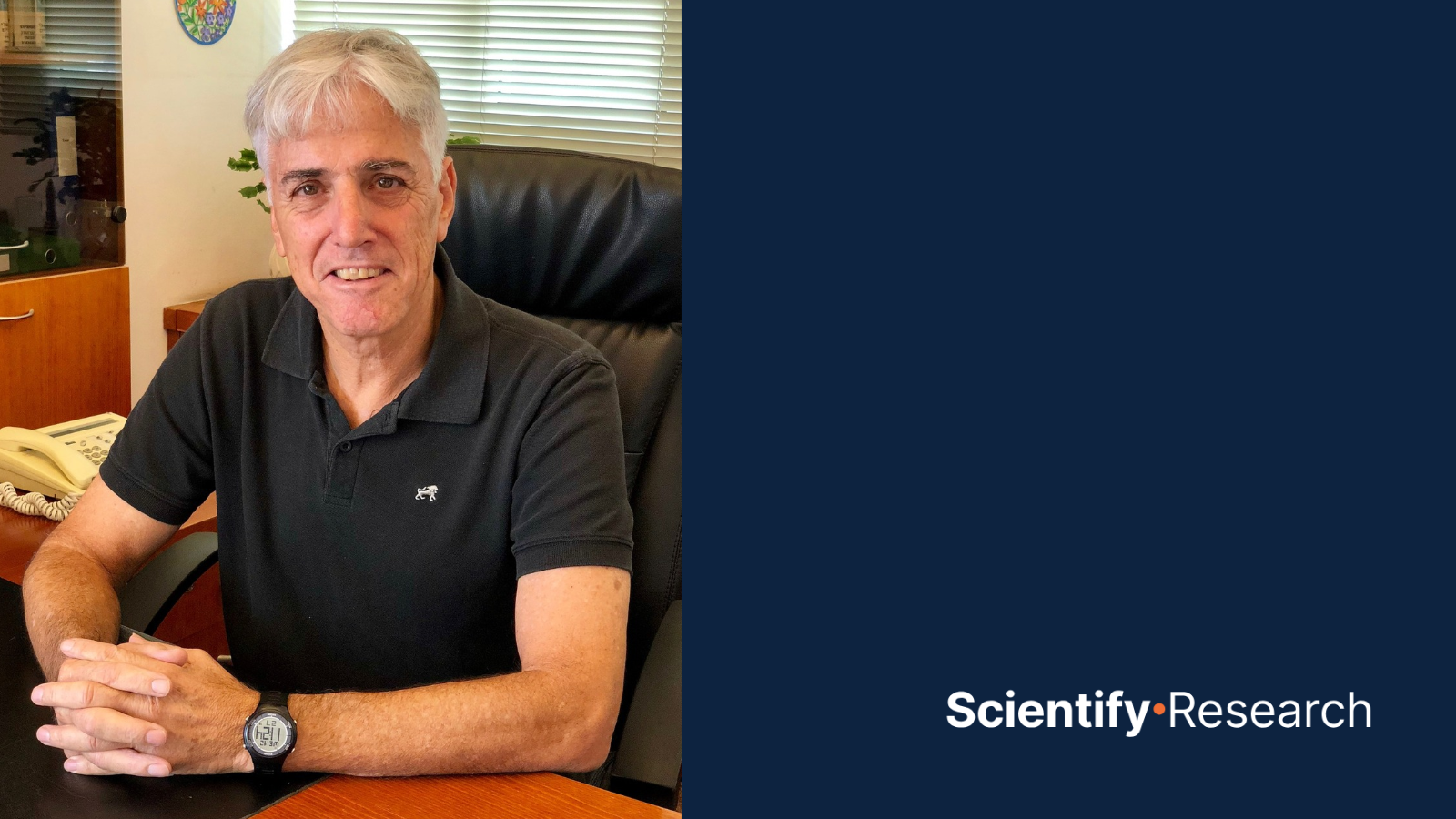
Preface: In this interview we speak with Prof. Yoram Kapulnik, Executive Director of BARD, about the organization’s support of bilateral and multi-disciplinary agricultural research between Israel and the U.S. Here we learn about how these collaborations support researchers in moving toward sustainable and efficient solutions in food safety and precision agriculture.
BARD was established to strengthen agricultural research through collaboration between the United States and Israel. What was the original vision behind the organization, and what needs did its founders hope to address?
The original vision behind BARD, or the United States-Israel Binational Agricultural Research and Development Fund, was to bring together the complementary strengths of American and Israeli agriculture.
The United States offered broad research capacity, manpower, training facilities, advanced technologies, and extensive agricultural production, while Israel had developed agricultural technologies focused on maximizing production while using limited resources, particularly water and labor.
The founders saw an opportunity for both countries to benefit from closer research cooperation. In the United States, increasing demand for limited water supplies and pressure to reduce energy use created a need for more resource-efficient agricultural approaches, an area in which Israel had considerable experience. At the same time, Israel could continue to benefit from the knowledge and experience of U.S. agriculture.
BARD’s work was therefore envisioned as a way to combine these complementary capabilities through agricultural research for the mutual benefit of both countries.
What makes the binational model particularly valuable for agricultural research and development? How does bringing together U.S. and Israeli researchers create opportunities that might not otherwise exist?
The value of the binational model is that it makes the collaboration itself part of the research strategy. Rather than two countries working separately on similar problems, researchers pool their knowledge and capabilities to develop solutions with relevance beyond a single research setting.
We have found that the synergistic partnerships fostered by BARD are highly advantageous to both Israeli and American researchers.
Many of BARD researchers continued to collaborate with their U.S. or Israeli partners following the termination of the awards they’ve received. This indicates that the research awards forge long-term professional discourse and exchange between the U.S. and Israeli agricultural research communities.
BARD supports research addressing agricultural, food, and nutrition challenges. Which scientific challenges are currently most important to the organization, and how do you anticipate these priorities evolving in response to global needs?
BARD conducts periodic reviews of its research priorities to ensure they remain relevant to current and emerging agricultural research needs. The review process is led by BARD’s Technical Advisory Committee (TAC). Eight additional experts were recently invited to join the TAC, forming an extended reassessment panel. Panel members received background information on BARD, an overview of the existing research priority areas, and information on currently funded research projects.
Our current research priorities:
- Improved efficiency of agricultural production, including sustainable development and engineering, enhancing nutritional value, efficient use of resources and agricultural waste, economic evaluation of policies, regulation, and labor; and use of functional genomics and proteomics to protect and produce traits supporting increased crop yield and genetic optimization in animals, with a focus on heterosis opportunities and consequences.
- Plant, animal, and agricultural environment defense, including pest and host genetics, invasive species and emerging diseases, early stress detection and rapid point of care methods, and the development of safe and bio-secure biological, physical, and chemical control measures.
- Agricultural production challenges in increased marginal conditions, including climate change and abiotic stress factors such as drought, salinity, high temperatures, and nutrient and soil stress.
- Food quality, safety, and security, including improved assessment and detection methods, nutritive value and post-harvest treatment, reduction of food loss and waste, enhanced supply chain quality and technologies, functional foods, and the development of alternative quality protein sources including plants, fungi, algae, insects, and tissue.
- Soil & water, quality, and quantity, including efficient use of low-quality water (grey, black, saline), improved economic return for water in agriculture, crop response to soil and water quality and their constituents, and the impact of nutrients and agricultural chemicals on water quality.
- Agricultural Engineering/Precision Agriculture, including sensors, instrumentation, and control systems; robotics and artificial intelligence; mechanization for improving labor efficiency; and biological engineering, biotechnology, and nanotechnology.
- Sustainable Agri-environmental management, including sustainable ag-based energy systems for reduced energy costs, bioconversion technologies, agricultural feedstock, controlled environment and urban agriculture, renewable resources and ecosystem services, circular bioeconomy, and reducing agricultural waste.
What distinguishes a strong application to BARD? Beyond scientific excellence, what do you look for in terms of collaboration, practical relevance, and the potential for research findings to address real-world agricultural challenges?
A strong application combines scientific excellence with a high probability of success, clear benefits to agriculture, and a strong U.S.-Israel collaboration. We run rigorous screening based on excellence and relevance (dual peer review). BARD’s proposal evaluation process is recognized as one of the most thorough in the field. Every proposal is reviewed by binational expert panels that assess not only scientific novelty and feasibility, but also significance and practical applicability to agriculture and food security. This balance ensures that funding is directed toward groundbreaking research with a clear path to real-world application, rather than detached theoretical studies. We look for proposals with a well-defined research question, a sound approach, and a realistic pathway to achieving meaningful results.
The quality of the collaboration is also essential. The U.S. and Israeli partners should bring complementary expertise and demonstrate that working together strengthens the research. At the same time, the proposal should clearly show its potential benefit to agriculture, addressing agricultural challenges and creating knowledge, technologies, or approaches that could ultimately be applied in practice.
BARD places an emphasis on developing the next generation of agricultural scientists through its fellowship programs. Why is investing in early-career researchers important to your mission, and how can these opportunities shape researchers’ careers and future collaborations?
The future of agricultural research depends not only on scientific ideas, but also on developing the people who will carry that work forward. BARD’s fellowship programs give young scientists opportunities to gain new research skills and techniques, broaden their experience, and establish themselves within the international agricultural research community. The Vaadia-BARD Postdoctoral Fellowship, for example, was established specifically to identify and support promising young scientists. Over 300 fellows have participated over the years.
Just as importantly, these fellowships help researchers build professional relationships across the United States and Israel at an early stage in their careers. Graduate students can conduct research in the partner country, gaining research experience while developing binational networks. Those relationships can provide a foundation for future scientific collaboration.
In that sense, BARD’s investment goes beyond an individual fellowship: it helps develop a strong bilateral network of agricultural researchers who can continue working together on shared agricultural priorities throughout their careers.
What role do these early-stage collaborations play in your broader funding strategy, and can you share an example of a collaboration that grew into a significant research initiative?
Early-stage collaborations are an important part of BARD’s broader funding strategy because they give researchers the opportunity to combine complementary expertise, test new ideas, and build the scientific foundation for longer-term research. The goal is not only to support an individual project, but to create partnerships that can develop over time and translate fundamental research into practical applications.
A good example is the work of Prof. Yonathan Zohar of the University of Maryland. His first BARD grant, was awarded in 1985, and then he started working at the Israel Oceanographic and Limnological Research institute focused on understanding the biological control of fish reproduction. As the research progressed, Zohar moved to the US and began collaborating with Robert Langer of MIT, whose expertise was in drug-delivery systems.
With a second round of BARD funding in 1989, they developed an extended-release hormone delivery system that could reliably induce reproduction in captive fish. The technology was subsequently adapted to multiple commercial fish species. An external review reports that this body of work helped transform hatchery-based aquaculture and generated an estimated $12 billion in economic growth.
This is a strong illustration of what BARD funding can achieve: an initial scientific collaboration can develop into sustained interdisciplinary research, bringing together basic science and technological expertise and ultimately producing applications with substantial economic and societal impact.
BARD’s external review reported a substantial return on its research investment. How does the organization assess its impact, and what outcomes do you consider most meaningful when evaluating the long-term value of its funding?
BARD looks at impact beyond the immediate results of an individual research project. External reviews were conducted periodically, assessing how many jobs were created and how many patents were listed and publications were published. The review also measured cost savings and capacity building outputs.
An important measure is whether funding helps research advance through Technology Readiness Levels, encourages academia-industry partnerships, and creates a pathway from scientific discovery to practical agricultural applications.
Long-term impact also includes sustained U.S.-Israel research collaborations, continued scientific work, and opportunities for the next generation of researchers.
What advice would you offer researchers interested in applying for BARD funding, particularly those seeking to establish new collaborations between the U.S. and Israel?
I would encourage them to start with the partnership itself. Look for a collaborator whose expertise complements your own and identify a research question that is genuinely relevant to both countries. The strongest collaborations are those where each partner brings distinct knowledge, capabilities, or perspectives to the project.
It is also important to begin the conversation early. Take the time to develop the research idea together, define clear roles, and make sure the proposal demonstrates the added value of working binationally. Researchers should carefully review BARD’s priorities and guidelines and clearly explain both the scientific significance of the work and its potential contribution to agriculture.
Ultimately, a successful proposal should show not simply two researchers working on the same problem, but a true partnership that can achieve more through collaboration.
What are the biggest opportunities and challenges facing agricultural research in the coming years, and how do you see BARD contributing to solutions through its funding programs?
Agriculture is facing increasingly complex challenges, from climate variability and water scarcity to food security, emerging pests and diseases, and the need to produce more efficiently and sustainably.
At the same time, advances in areas such as artificial intelligence, precision agriculture, remote sensing and the use of satellite data, biotechnology, and smart farming create significant opportunities to address these challenges in new ways. These technologies can provide valuable insights into crop conditions, water use, soil health, and environmental changes, helping farmers make more informed decisions.
We contribute by supporting collaborative U.S.-Israel research that brings together complementary expertise and focuses on problems that are relevant to agriculture in both countries. An important opportunity is also to help promising research move beyond the laboratory by supporting projects at different stages of technological readiness and encouraging stronger partnerships between academia and industry.
By funding innovative research, supporting early-career scientists, and creating connections among researchers, industry, and other stakeholders, BARD can help translate scientific advances into practical solutions for agriculture.
Have a story to share?
Every funding organization has a unique perspective on supporting research and driving innovation. At ScientifyResearch, we want to bring these perspectives to the forefront, sharing insights from funders on their priorities, challenges and the impact of research funding.
Interested in sharing your organization’s story? Get in touch with the ScientifyResearch team to be featured in a future interview.
Acknowledgements
We sincerely thank Prof. Yoram Kapulnik for taking the time to share his insights on how BARD is supporting this generation of agricultural researchers across Israel and the U.S. in building cutting-edge solutions that can lead to improvements in global food security and precision agriculture.