
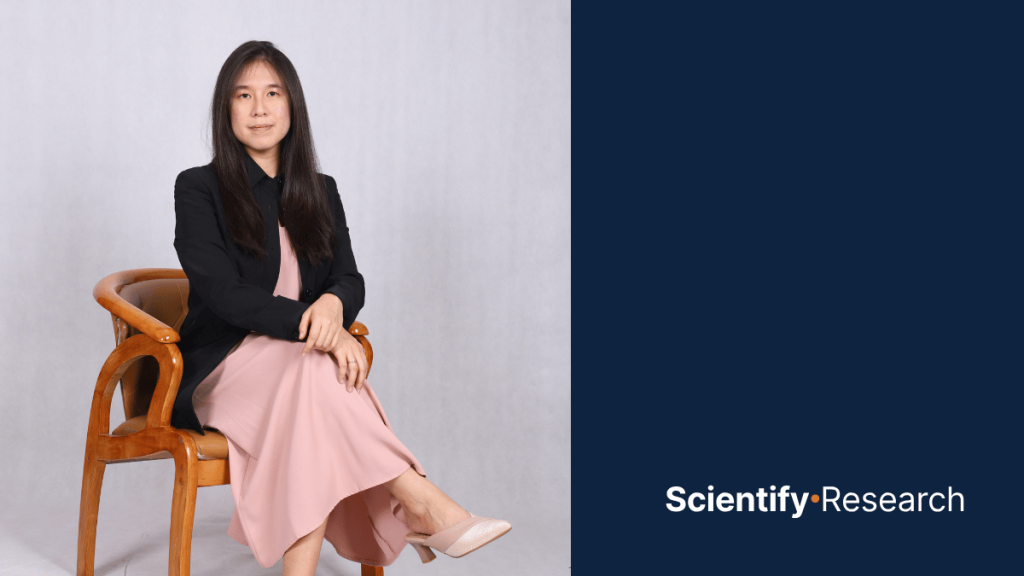
Preface: Dr. Lee Sue Han’s research sits at the intersection of artificial intelligence and the natural world. Using AI to understand, monitor, and ultimately help protect plant biodiversity. In 2025, that work earned her the Nature Inspiring Women in Science – Scientific Achievement Award, recognizing not just a body of published research, but the students, collaborations, and research ecosystem she’s built along the way. We spoke with her about that journey, what it takes to win international recognition as a researcher, and her long-term vision for what she calls a “Digital Twin of Nature.”
Could you tell us about your research in AI-driven plant biodiversity and sustainable agriculture, and what motivated you to pursue this field?
My research lies at the intersection of artificial intelligence, computer vision, computational botany and plant biodiversity. I have been working in this area for almost a decade, and what has motivated me most is a simple question: how can we make AI genuinely useful for understanding the complexity of the natural world?
I began with plant species identification. In my early work, including Deep-Plant, I developed deep learning approaches to recognise plant species. But I was interested in more than accuracy. I wanted to understand what the AI was actually learning from the plant. This led me to investigate the visual features learned by deep networks and how they related to meaningful botanical characteristics, including leaf venation.
I then extended the problem from individual leaves to multiple plant organs, and subsequently into plant disease identification. As I worked on disease recognition, I became increasingly interested in the reliability of AI. If a model says that a plant has a particular disease, is it actually recognising the disease symptoms, or is it learning something incidental from the image?
That question led me towards more challenging AI problems. In nature, we cannot assume that the conditions we encounter tomorrow will be the same as those represented in our training data. We have new species, different environments and previously unseen diseases.
So my research progressively moved towards cross-domain recognition, unseen plant disease recognition and more generalisable AI. I also began exploring vision-language approaches, where information beyond the image itself can help AI build better representations of plants and diseases.
Looking back, there is a clear progression in my work:
first, can AI recognise a plant?
Then,
what is AI actually learning from the plant?
And then,
can AI recognise and reason about biological conditions that it has never seen before?
These questions have gradually taken me from computer vision towards computational botany and ecological intelligence.
Today, I am interested in how we can bring together AI with botanical knowledge, biodiversity observations, herbarium collections, field data, remote sensing and other sources of ecological information.
My long-term vision is to build towards a Digital Twin of Nature—a system that can help us move beyond simply documenting biodiversity to understanding how ecosystems are changing, why they are changing and how we can make better decisions to conserve them.
What attracted you to the Nature Inspiring Women in Science – Scientific Achievement Award, and what did receiving this recognition mean to you personally and professionally?
What attracted me to this award was its international and interdisciplinary nature. It recognises women scientists across different disciplines and from different parts of the world.
That really resonated with me because scientific talent and impactful research are not limited to the most established institutions or countries. There are researchers working in less visible regions who are addressing challenges that are globally important.
For me, the award represents a very important principle: where you come from should not determine how far your research can go. What matters is the quality of the research, the vision behind it and the impact it can create.
Professionally, receiving the award was an important international recognition of my work in AI and plant biodiversity. It also gave greater visibility to an area that I believe deserves much more attention.
We often talk about biodiversity, but plants can be overlooked compared with animals. This is sometimes referred to as plant blindness. Yet plants are fundamental to our ecosystems, food systems, climate regulation and human wellbeing.
So I hope the recognition does more than acknowledge my own work. I hope it also helps demonstrate what AI can contribute to plant science, biodiversity conservation and environmental sustainability.
Personally, I am very grateful. But I also see it as a responsibility to use the recognition to create greater opportunities for research, collaboration and the next generation of scientists.
What was your experience of preparing for the award, and how did you communicate the potential impact of your research in AI, biodiversity conservation, and sustainable agriculture?
It was my first time applying for an international scientific award, and the preparation gave me an opportunity to step back and look at my research journey more broadly.
Rather than presenting the application simply as a list of publications, I tried to show how my research vision has translated into concrete actions and outcomes over the years.
I have always believed that having a long-term vision is important, but I also believe that a vision has to be demonstrated through what you actually do.
For me, that has meant progressively developing the research itself, building research capacity, mentoring students, establishing interdisciplinary collaborations, and creating opportunities for the research to move beyond the laboratory.
For example, my research has developed from AI-based plant recognition and disease identification towards more challenging problems in generalisation, unseen conditions and biodiversity applications. At the same time, I have worked to build the ecosystem needed to support this research—developing students, establishing collaborations with researchers and organisations in different disciplines, and strengthening connections between AI, plant science, forestry, agriculture and ecology.
I have also actively worked to translate the research into broader biodiversity applications, rather than keeping it purely as a computer science exercise. This includes working with herbarium collections, biodiversity data and real-world environmental applications, and developing collaborations with organisations and researchers working directly in biodiversity and conservation.
So, when preparing the award application, I wanted to demonstrate three things.
First, the scientific achievement—what I have contributed through my research.
Second, the action and impact—what I have actually built, who I have worked with, the students and researchers I have developed, and how the research has been connected to real-world challenges.
And third, the future direction—where these activities can lead next.
I think this is particularly important when communicating research impact. A vision on its own is only an aspiration. What makes it meaningful is when you can show the steps you have already taken to turn that vision into reality.
For me, the award application was therefore an opportunity to connect those three elements: what I have achieved, what I have already done to create impact, and what I am now in a position to do next.
And I think that is also why the recognition was meaningful to me. It did not simply recognise an individual research output. It recognised a broader research trajectory and the work I have been doing to build that direction over time.
Based on your experience, what best practices would you recommend to researchers preparing an application for an international research award such as the Nature Inspiring Women in Science Award.
Based on my own experience, and now having the opportunity to serve as a panel member for the Nature Inspiring Women in Science – Scientific Achievement Award 2026, I would say there are several things that applicants should demonstrate clearly.
First, there has to be strong scientific achievement.
This is, after all, a Scientific Achievement Award, so the scientific foundation has to be there. Applicants need to demonstrate the quality, originality and significance of their research, rather than simply the number of publications.
Of course, publications, citations, research grants, patents or other outputs provide evidence of achievement. But I think the more important question is: What is the researcher actually contributing to the field? Has the researcher developed a distinctive body of work? Has she addressed an important problem or opened up a new research direction?
Second, I would look very carefully at impact.
Research should not remain important only within the researcher’s own discipline. Increasingly, the most meaningful research is research that can connect disciplines and address a larger problem.
For example, in AI, developing a model and demonstrating that it performs well on a benchmark is one level of achievement. But the significance becomes much greater when that technology can address a genuine problem in another domain—whether that is medicine, agriculture, biodiversity or environmental science—and demonstrate that the AI is actually useful there.
So applicants should be able to explain not only “What did I develop?”, but also “What did it enable?”
Third, leadership is very important.
Scientific leadership is more than being successful in your own research area. I would ask: How has this researcher influenced other people?
Has she developed students and early-career researchers? Has she built research teams? Has she created collaborations? Has she opened opportunities for researchers who may not otherwise have had access to them?
And particularly for an award recognising women in science, I think it is meaningful to consider how a researcher contributes to the wider scientific community and helps others progress.
Fourth, I would look at the ability to translate research beyond the laboratory.
Fundamental research is absolutely essential. It is what allows science to move forward.
But if research stops entirely at the theoretical or experimental stage, its broader impact can sometimes remain limited. Researchers should therefore think about how to bridge the gap between scientific discovery, innovation and real-world application.
That does not necessarily mean that every fundamental researcher needs to commercialise their work. Translation can take many forms—working with government, industry, communities, practitioners or researchers from other disciplines to make the knowledge useful in a different context.
For me, this connection between research, innovation and society is particularly important.
Finally, I think a strong candidate needs to demonstrate a clear trajectory and vision.
An award should not only recognise what someone has done in the past. It should also give us confidence that the researcher’s best contributions may still be ahead.
I would therefore look at whether there is a coherent research direction: Where has this researcher come from? What has she built? How has the work evolved? And what is she now in a position to achieve?
A strong candidate, in my view, is someone who has achieved scientifically, demonstrated meaningful impact, developed others, crossed disciplinary or institutional boundaries, and built a clear direction for the future.
And I think these elements are particularly important for women researchers because recognition should not only celebrate individual success. It should also recognise the leadership, influence and opportunities that women scientists create for others.
So, if I were advising a researcher preparing an international award application, I would say: don’t simply present your CV. Tell us what you have changed, who you have influenced, why your work matters, and what you are going to build next.
What did it feel like to learn that you had been selected as the 2025 Nature Inspiring Women in Science – Scientific Achievement Award recipient?
My first reaction was surprise.
I was so surprised that I actually contacted my university’s Human Resources team to help verify the award and the invitation!
Once I received the official confirmation and learned more about the award and the other recipients, I felt extremely honoured. I never expected that my work in AI and plant biodiversity would receive this level of international recognition.
For me, this recognition is not only about my own achievement. It also represents the contributions of my students, collaborators and colleagues who have supported me throughout my research journey.
It also represents the research community I come from and, more broadly, the opportunity to show that impactful research can come from Malaysia and Southeast Asia and contribute to the global scientific community.
So I feel very grateful and honoured to receive this award. At the same time, I see it as a responsibility to continue developing the research, strengthening collaborations and creating opportunities for the next generation of researchers.
Were there any challenges or setbacks you encountered while developing or applying AI and digital technologies to plant biodiversity and sustainable agriculture
Yes. One of the biggest challenges has been building the resources, expertise and interdisciplinary capacity needed to work at the intersection of AI and biodiversity. AI requires computational resources and specialised technical expertise, but biodiversity research also requires knowledge from botany, forestry, agriculture, ecology and environmental science.
Another challenge is the complexity of real-world biological data. Models may perform well on benchmark datasets, but nature is much less predictable—data can be limited, environments vary, and we constantly encounter conditions that were not represented during training.
These challenges have become research questions for me. Rather than focusing only on improving benchmark accuracy, I became interested in making AI more generalisable and robust, particularly when dealing with unseen biological conditions. This has shaped my work on cross-domain plant identification, unseen plant disease recognition and representation learning.
How did you approach or overcome those challenges, and is there anything from that experience that you would share with other researchers facing similar obstacles?
I learned that building a sustainable research ecosystem can sometimes be more challenging than conducting the research itself.
My approach has therefore been to build it progressively, starting with the resources and people available to me and strengthening the ecosystem over time.
One of my priorities has been developing research talent. Students and early-career researchers are an important foundation of any research programme. By providing them with opportunities to work on meaningful research, developing their technical and research capabilities, and mentoring them throughout the process, I have gradually built a team that can contribute to a longer-term research agenda.
From there, I expanded the research network beyond the university, establishing collaborations with other universities, government agencies, industry and international research partners. This has been particularly important for my work because biodiversity research is inherently interdisciplinary and cannot be addressed effectively from a single discipline.
I have also learned to be strategic with limited resources. Rather than waiting for ideal conditions or substantial funding, I believe it is important to make the most of the resources available, demonstrate the value of the research, and use those early achievements to create opportunities for further growth.
Building an international network has also been an important part of that process. Conferences, workshops and scientific symposiums provide opportunities not only to present research, but also to exchange ideas, identify complementary expertise and establish collaborations that would not otherwise be possible.
Finally, research requires persistence. There will inevitably be rejected papers, unsuccessful grant applications and projects that do not produce the expected results. I see these not simply as setbacks, but as part of the process of refining the research, learning from experience and strengthening the next attempt.
For researchers facing similar challenges, my advice would be to start where you are, build strategically, invest in people, and keep expanding your network. A strong research programme rarely develops overnight; it is built through consistent effort, collaboration and a willingness to keep moving forward.
How do you hope this recognition will influence the next stage of your research, particularly your work using AI to support biodiversity conservation and more sustainable agriculture?
The recognition gives greater visibility to a research direction that I have been building for many years, and I see it as an opportunity to accelerate the next stage of that work.
My long-term vision is to develop a Digital Twin of Nature—integrating AI with biodiversity and ecological information from sources such as field observations, herbarium collections, remote sensing and other environmental data.
The goal is not simply to create another biodiversity database, but to develop intelligent systems that can help us understand how ecosystems are changing, why those changes are occurring and potentially what may happen in the future.
Importantly, I have already started building the foundation for this direction. I am establishing VIVE AI Lab, which focuses on developing AI technologies and research for biodiversity and environmental applications. Through the lab, I am bringing together research activities, students and interdisciplinary collaborations across AI, botany, forestry, agriculture and ecology.
The next stage is to scale this research ecosystem, strengthen international collaborations, and connect the different data, AI and ecological components needed to move towards the Digital Twin of Nature.
This will require sustained collaboration among AI researchers, botanists, ecologists, foresters, agricultural scientists and policymakers, as well as investment in data, computational infrastructure and research talent.
I hope the recognition can help create greater visibility and opportunities for these collaborations and encourage more investment in this area.
Biodiversity may not always have an immediate economic value, but it underpins food and agriculture, carbon storage, climate resilience, ecosystem services and ultimately human wellbeing.
So, ultimately, I hope AI can help make biodiversity more visible, measurable, understandable and actionable, enabling us to make better-informed decisions about how we understand, manage and protect the natural environment.
What contribution do you hope your research will make to the wider scientific conversation around artificial intelligence, biodiversity conservation, and environmental sustainability?
I hope my research can contribute to a broader scientific conversation about how we develop AI for complex natural systems, and how studying these systems can, in turn, help advance AI itself.
Nature presents a very different challenge from many of the environments in which AI is traditionally developed. Biological systems are dynamic, highly variable and interconnected. Data are often incomplete, observations are unevenly distributed, and we continuously encounter species, diseases and environmental conditions that were not represented in the original training data.
I have experienced these challenges directly through my research. For example, in plant species and disease recognition, achieving high accuracy on a benchmark dataset is only the starting point. The more fundamental question is whether an AI system can generalise across different environments, recognise previously unseen conditions and remain reliable when applied in the real world.
This creates an important two-way relationship between AI and biodiversity.
On one side, AI can transform how we study and monitor biodiversity. It can help us process large volumes of observations, identify plant species and diseases, analyse historical collections, and support biodiversity monitoring at scales that would be extremely difficult to achieve manually. These capabilities can ultimately contribute to more effective conservation planning, ecological monitoring and sustainable agriculture.
At the same time, biodiversity can also push AI forward.
When we work with nature, we cannot simply assume that future observations will look like our training data. We have to deal with uncertainty, unseen conditions, environmental variation, incomplete information and constantly changing systems. These are not only challenges for biodiversity; they are fundamental challenges for the next generation of AI.
Therefore, I do not see biodiversity simply as another application area for existing AI technologies. I see it as a scientific frontier for AI, where we can investigate how to develop systems that are more robust, adaptive, generalisable and capable of working with scientific and ecological knowledge.
A key part of my research has also been bringing together expertise from computer science, botany, forestry, agriculture and ecology to address these complex biodiversity challenges. This interdisciplinary approach is important because many of these problems cannot be solved within a single discipline. We need to combine computational methods with domain knowledge and real-world scientific understanding.
There is also a much broader environmental and societal impact.
Biodiversity is not an isolated environmental issue. It is fundamentally connected to food security, agriculture, climate resilience, carbon storage, ecosystem services and human wellbeing. If AI can help us better understand biodiversity, detect changes earlier and provide stronger evidence for decision-making, its impact can extend far beyond the technology itself.
Ultimately, I hope my research can help move AI from simply recognising what is already known towards supporting new scientific understanding.
For me, this is the larger goal of ecological intelligence: using AI not simply to automate biodiversity observations, but to help us understand complex natural systems, identify changes, generate scientific insights and support better decisions for the environment.
My longer-term direction is to bring these ideas together through the concept of a Digital Twin of Nature—connecting biodiversity observations, AI models, ecological knowledge and environmental data to develop a more comprehensive and dynamic understanding of how nature changes over time.
Looking ahead to the next 5–10 years, where would you like to see research, innovation, and funding in AI for biodiversity, sustainable agriculture, and environmental sustainability develop?
Over the next five to ten years, I would like to see AI for biodiversity move from individual applications towards integrated scientific platforms.
At the moment, we often have separate technologies for species identification, herbarium digitisation, ecological monitoring, remote sensing, LiDAR, biodiversity databases and conservation planning.
The next step is to connect these different sources of information. My vision is to build the foundations of a Digital Twin of Nature, where information from satellites, drones, LiDAR, field surveys, herbarium specimens and other sources can be integrated with AI and ecological knowledge.
This would allow us to move beyond asking:
“What species are present?”
towards questions such as:
“How is this ecosystem changing?”
“Why is it changing?”
and ultimately:
“What can we do about it?”
To achieve this, funding needs to move beyond short-term technology demonstrations and support long-term datasets, interdisciplinary science, research infrastructure, talent development and international collaboration.
I would particularly like to see stronger investment in biodiversity-rich regions such as Southeast Asia, where there is enormous ecological value but also a need to strengthen local scientific and technological capacity.
I also hope we will see greater collaboration between AI researchers and scientists who work directly with nature. The most important breakthroughs may come from bringing these communities together rather than working in isolation.
Ultimately, my hope is to contribute to a new generation of ecological intelligence—AI that works alongside scientists, conservationists and communities to help us better understand and protect the natural world.
Looking for funding to take your research further?
Turning innovative research ideas into real-world impact takes more than expertise. It also takes the right funding and opportunities to support the next stage of your work. ScientifyResearch helps researchers discover funding opportunities in one searchable database, making it easier to find grants that align with their research interests and goals.
Click here to find your next funding opportunity
Acknowledgments
We are grateful to Dr. Lee Sue Han for generously sharing her time, her research journey, and her vision for the future of AI and plant biodiversity. We wish her, her students, and her collaborators at VIVE AI Lab continued success as they work toward a deeper, more connected understanding of the natural world.