
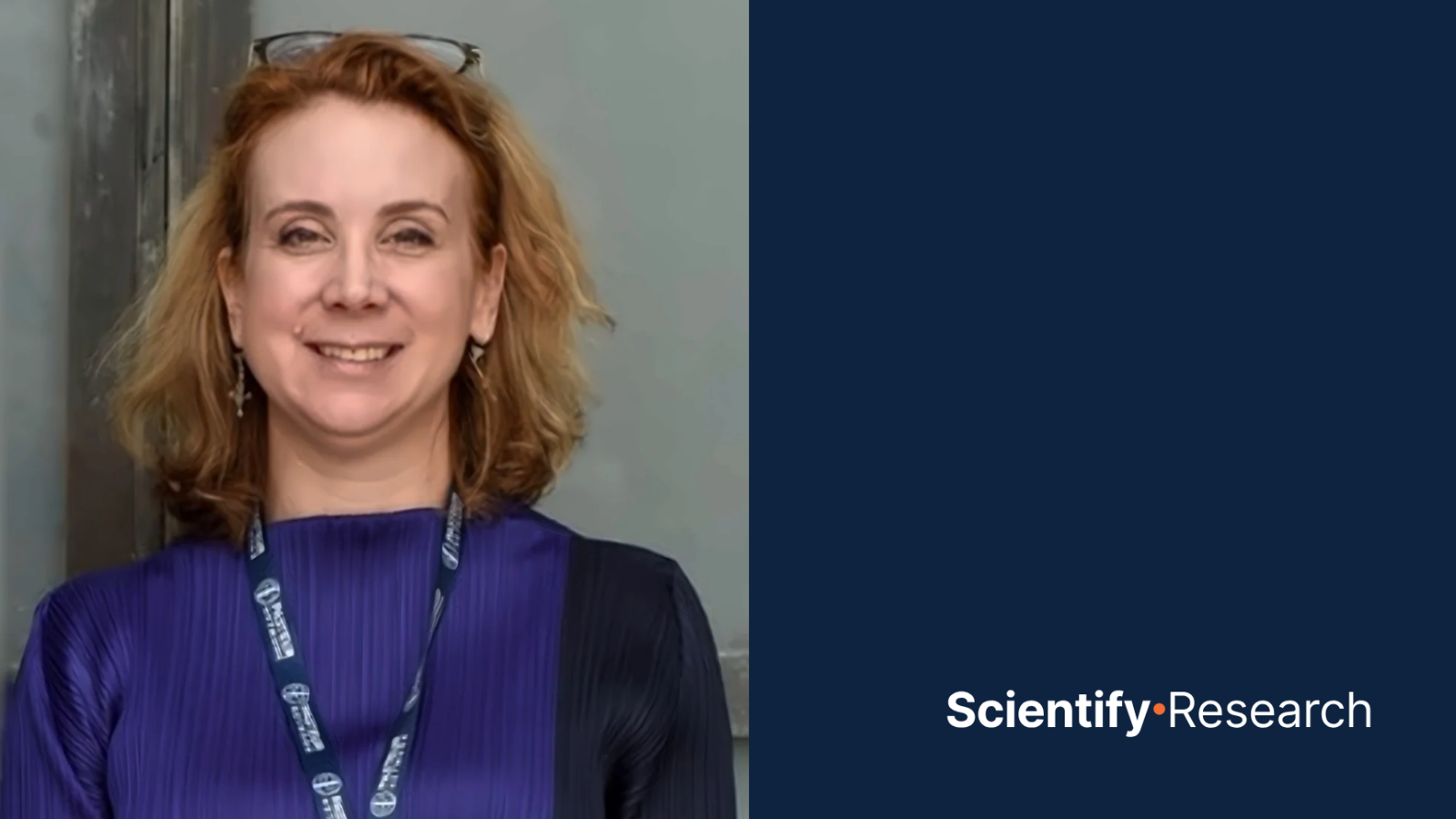
Preface: How can international research collaboration strengthen global health and help institutions respond to shared challenges? In this interview we speak with Rebecca Grais, Executive Director of the Pasteur Network. Here she tells us how the Pasteur Network brings together communities of knowledge to advance equity and global public health preparedness.
Could you tell us the story behind the creation of the Pasteur Network? What inspired the development of an international community of research and public health institutions, and how has its mission evolved over time?
The Pasteur Network grew from a simple but powerful idea of Louis Pasteur: scientific discovery should serve people wherever they live. Its roots reach back to the late nineteenth century, with the establishment of institutes in Saigon (1891), Tunis (1893), Dakar (1896), and Tananarive (1898).
These institutions developed in different contexts, responding to local health challenges while sharing a commitment to research, public health, and training. Today, the Network brings together 33 member institutes in 25 countries across five continents, roughly two-thirds of them in the Global South.
A major milestone came in 2021, with the modernization of its governance which gave members a stronger collective voice through participatory governance and an elected Board.
Our enduring purpose is to connect science with the needs of populations. What has evolved is how we work together: members increasingly shape shared priorities, connect complementary expertise, and lead collective action. The Network’s strength lies in the knowledge, capabilities, and relationships rooted in each institution, and in what we can achieve by bringing them together.
Please tell us a little about your own background and your role within the Pasteur Network.
My career has focused on preventing and treating infectious diseases in low- and middle-income countries, particularly through clinical trials of vaccines and therapeutics.
Before joining the Pasteur Network, I was Director of Research at Epicentre, the epidemiology and research organization of Médecins Sans Frontières. That experience shaped my conviction that research should respond to the needs of populations and produce evidence that can improve care and public health.
I became the Pasteur Network’s first Executive Director in June 2022, following the adoption of its new governance structure. My role is to help our members turn shared priorities into collective action, build partnerships, and secure the resources needed to sustain that work.
The Pasteur Network brings together research, education, public health surveillance and innovation. How do these different missions reinforce one another, and what makes this integrated approach valuable?
These missions reinforce one another because they connect the detection of a health problem with the ability to understand it and respond. Surveillance identifies emerging threats and generates research questions. Research informs clinical practice and public health policy, while education equips people to generate and apply that evidence. Innovation turns discoveries into useful tools, and experience with those tools raises new questions for research.
Our four strategic pillars—epidemic preparedness, research and innovation, knowledge communities, and good governance and equity—support these connections.
Dengue illustrates why this matters. Understanding and controlling it requires expertise in virology, mosquito ecology, clinical care, vaccines, and health systems, alongside the knowledge and participation of affected communities.
Through Collective Action on Dengue, we bring partners together to connect that expertise and address shared priorities. The value of the Pasteur Network lies both in its scientific capabilities and in the longstanding relationships that make collaboration possible.
Trust and shared scientific practices help members exchange information, interpret findings across different settings, and mobilize complementary expertise. Across 54 national reference laboratories, 19 WHO Collaborating Centre’s, and more than 15,000 scientific publications annually, the opportunity is to turn that collective knowledge into timely, locally relevant public health action.
How does the Network balance its members’ individual missions and institutional autonomy with the shared goal of addressing global health challenges?
Each member institute has its own governance, operates within its national legal framework, and defines its priorities in response to the populations it serves. Our role is to help members identify where working together can advance their individual missions while addressing challenges that cross borders.
Members shape the Network’s shared direction through an elected Board and contribute their expertise to joint initiatives. This makes collaboration a matter of shared purpose and mutual benefit.
What connects us is a common charter and a commitment to Pasteurian values: scientific excellence, solidarity, and service to public health. That identity extends to every member, whether or not its institution carries the Pasteur name.
Our 2025 Collaboration Agreement formalizes this balance between autonomy and collective responsibility, while membership contributions reflect each institute’s economic circumstances.
Scientific Working Groups and PNLink, our digital community platform, help turn these commitments into everyday exchanges and collaboration. The aim is for each institution to gain strength from belonging to the Network and to contribute in ways that reflect its expertise, priorities, and capacities.
Equitable research partnerships are an important part of the Network’s values. How do you work to ensure that international collaborations reflect local priorities, recognize the expertise of all partners, and support shared leadership?
For us, an equitable partnership means that the people closest to a health challenge help define the research questions, lead the work, and share in its benefits. Local institutions bring scientific expertise, knowledge of their health systems, and relationships with communities. Those contributions should carry real weight in decisions about funding, data, and how findings are used.
In 2024, we adopted the TRUST Code, a framework for fair research partnerships, and incorporated that commitment into our Collaboration Agreement.
We are also creating more opportunities for members to lead collaborations across the Network. For example, the African Leishmaniases Consortium is led from Tunis, while our Vaccine Manufacturing Initiative connects producers across Africa, Asia, and Latin America to strengthen their collective contribution to vaccine access and is led from Dakar.
Data is a particularly important test of equity. Institutions and communities that contribute data and biological samples should have a meaningful role in deciding how they are used, opportunities to lead the analysis, and access to the resulting knowledge and tools.
Our responsibility is to turn these principles into clear agreements and everyday practice, and to assess whether partners actually experience the collaboration as fair.
Could you share an example of a collaboration that illustrates how combining expertise across institutions or countries has helped advance a research question or address a public health challenge?
Collective Action on Dengue, mentioned above in question 3, is a good example. Dengue risk depends on how mosquitoes, people, and their environments interact. Changes in rainfall and temperature, urban growth, housing, and access to healthcare all influence where infections occur and how severely they affect communities. Understanding these connections requires several kinds of expertise.
The Pasteur Network helps bring together scientists and public health partners who often approach different parts of that problem. Entomologists study the mosquitoes that transmit the virus; epidemiologists track infections; climate scientists and modelers examine changing patterns of risk; and social scientists explore people’s experiences and the feasibility of prevention measures.
Connecting their findings across countries can help explain why an approach works in one setting and needs adapting in another.
The aim is to give public health teams a more complete picture: where risk is increasing, which communities are most exposed, and which responses are feasible locally. Collective Action on Dengue is building the relationships and shared priorities needed for that work.
Its value will ultimately be measured by whether these collaborations help countries make better decisions about dengue prevention and control.
How does the Network approach capacity-building so that collaborative projects strengthen the long-term research capabilities of participating institutions, alongside delivering immediate scientific results?
We start with a simple question: what will remain at the institution when the project ends? Alongside scientific results, a collaboration should leave people with stronger skills, greater responsibility, and the support they need to lead future research. Preparedness depends on expertise and systems built and sustained locally over time.
That means connecting training to opportunities to apply it. Early career researchers need mentorship, funded responsibilities, and experience developing their own questions and managing research. Institutions also need reliable laboratories, data systems, and teams that can support grants, ethics review, and clinical trials. Training individuals has limited lasting value if the conditions for them to use their expertise are missing.
Our initiatives support different parts of this effort. SPARK helps researchers develop collaborative projects, while the Climate and Health Observatory Accelerator supports fellows working across climate and health.
Through DURABLE, we have provided bioinformatics training to help scientists analyze data during outbreaks. We also work with partners to advocate for sustained investment in clinical trial systems.
The test of success extends beyond courses delivered or papers published: can participating institutions lead the next study, secure funding, and respond more effectively to the health priorities of their communities?
How does the Pasteur Network define and evaluate the impact of its research, particularly when the path from fundamental discovery to a practical health outcome may take many years?
We define impact as the contribution research makes to better health and to the ability of institutions and communities to address their own health challenges. That contribution can take many years to emerge, particularly in fundamental research. A discovery may open a new field of investigation long before it leads to a diagnostic, treatment, or vaccine.
We therefore assess progress over different timescales. Publications, grants, and researchers trained help us understand scientific activity and the capabilities being developed. We also look for evidence that findings inform policy or clinical practice, that tools become available and useful, and that institutions are better equipped to lead research and respond to outbreaks. Our monitoring and evaluation framework, linked to the 2025–2030 Roadmap, helps us follow these pathways.
Numbers alone cannot tell the whole story. We also need to understand who benefits, whose priorities research addresses, and what enables or prevents findings from being used. Because health improvements usually reflect the work of many partners, we aim to describe the Network’s contribution fairly. The challenge is to remain accountable for progress while giving discovery science the time and freedom it needs.
What lessons have emerged from the Network’s collective response to recent public health emergencies, and how are these informing future research collaboration and preparedness?
COVID-19 helped shape the Pasteur Network’s transition to its new governance model and reinforced three lessons that guide our work today.
First, preparedness depends on relationships built before a crisis. Scientists who know and trust one another can share information, make sense of new findings, and mobilize expertise quickly. Those connections need ongoing support. Our digital community platform, PNLink, helps members stay in touch and find colleagues with the expertise they need.
Second, a rapid scientific response must go hand in hand with equitable access. The pandemic demonstrated extraordinary scientific progress, but also profound inequalities in access to vaccines, diagnostics, and treatments. Research collaborations should address these issues from the beginning: how data and samples will be shared, who will benefit from discoveries, and how resulting products will reach affected populations. Our data and sample sharing plans and Vaccine Manufacturing Initiative support this effort.
Third, countries need sustained investment between emergencies. Laboratories, surveillance systems, and trained teams take years to develop. During COVID-19, institutions with established capabilities were better positioned to identify threats and inform the response. Our collaboration across the Network, including participation in WHO’s International Pathogen Surveillance Network, aims to strengthen those capabilities so that more institutions can help lead the response when the next emergency occurs.
What do you see as the biggest opportunities for the Pasteur Network over the next five to ten years?
The biggest opportunity is to turn the Network’s collective expertise into a stronger ability to address health challenges across countries. In a period of geopolitical uncertainty and pressure on research funding, institutions need reliable partners and ways to sustain cooperation over time.
Over the next five to ten years, I see three particularly important opportunities. The first is to strengthen preparedness and response by connecting surveillance, research, and public health expertise across borders, including for diseases whose spread is changing with the climate. Regional outbreak teams could help members mobilize support quickly when an emergency occurs.
The second is to connect research more closely with the development and regional production of vaccines and diagnostics. The Network brings together research institutes and manufacturers across Africa, Asia, and Latin America. Building stronger links between them, alongside partners, could help regions respond more effectively to their own health needs.
The third is to support the next generation of scientific leaders, particularly in the Global South, with opportunities to lead research, manage resources, and shape international collaborations. This requires sustainable funding and governance that gives members a meaningful voice.
Our ambition is for the Network’s influence to grow through what its members can achieve together: stronger institutions, fairer partnerships, and scientific advances that reach the people who need them.
Ready to take your research further?
Finding the right funding opportunities is an important step in turning research ambitions into reality. But with so many opportunities to navigate, knowing where to start can be challenging. ScientifyResearch helps you discover relevant research grants in one searchable database, making it easier to identify opportunities that align with your research goals.
Click Here to find your next funding opportunity.
Acknowledgements
We sincerely thank Rebecca Grais for taking the time to share with us more about the Pasteur Network‘s goals of supporting the next generation of scientific leaders and supporting research innovation that makes a meaningful difference worldwide.