Estimated reading time: 5 minutes
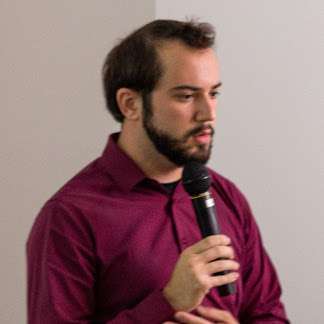
Preface: This essay by Filipe Bernardi, from Ribeirão Preto Medical School, University of São Paulo(Brazil), and also Faculty of Medicine, University of Porto (Portugal), is one of ScientifyResearch’s Rare Disease Science Communication Award entries.
If you live with a rare disease in Brazil, chances are your medical story is scattered across clinics, spreadsheets, and paper forms. That fragmentation isn’t just inconvenient, it delays diagnosis, complicates care, and hides the big picture that policymakers need to plan services. Our team set out to change that by laying the groundwork for Brazil’s first national rare disease registry, so that every consented data point can help a person, a family, and ultimately thousands of others with similar conditions.
Rare diseases are individually uncommon but collectively affect millions. When information is trapped in silos, clinicians repeat tests, researchers can’t see patterns, and patient advocates struggle to make the case for investment. A national registry is not a magic wand, but it is a proven way to connect dots. It lets the country understand who is affected, where the gaps are, and which interventions make a difference, turning data into a public good for health.
Building a FAIR Data System
In our study, we designed a practical data‑governance model to turn scattered records into a shared resource for care and research. That meant agreeing on common definitions, adopting simple rules for how information is stored and shared, and being transparent about ethics and privacy from the outset. We anchored the work on the FAIR principles, Findable, Accessible, Interoperable and Reusable, plain‑language ideas that boil down to this: people and computers should be able to find the data, understand it, combine it with other trusted sources, and reuse it responsibly.
We didn’t build a registry overnight. We started by listening: to clinicians who collect data between busy clinic hours; to IT teams who keep systems running on tight budgets; and to families who want their information used for good without losing control. Based on that feedback, we created a step‑by‑step plan: a living data‑management guide; straightforward training; and tools that fit existing clinical workflows rather than adding another screen to click through.
The effort brought together 45 rare‑disease centers across Brazil. We trained 463 professionals, from nurses and physicians to data managers and researchers, so that each site could collect information in a compatible way. We measured our progress using an independent checker called F‑UJI, which assesses how FAIR your data and metadata are. Our score was 50%: meaningful progress with clear room to grow. Strengths included using shared medical vocabularies so that “the same thing has the same name” everywhere, while the biggest gaps were in metadata completeness and the ease with which others can access records under the right safeguards.
What This Means for Patients and Families
Why does this matter for someone sitting in a waiting room? Because good data is simply good care in another form. When records line up, doctors can compare cases, spot red flags earlier, and coordinate across specialties. Researchers can design smarter studies that don’t overburden families. Health authorities can plan newborn screening, reference centers, and procurement with evidence rather than guesswork. In short, every correctly labeled record becomes a breadcrumb on the path to better outcomes.
Of course, we faced obstacles. Brazil’s regions differ in connectivity, staffing, and digital literacy. Some sites still rely on paper; others run sophisticated systems. Instead of forcing a single platform, we focused on common ground: shared identifiers, clear consent models, and practical checklists that any center can adopt. We also built in accountability. Teams could see their own progress, celebrate wins, and ask for support when something wasn’t working.
Two lessons stand out. First, “governance” sounds bureaucratic, but it is simply how we agree to work together. The best rules are the ones people use because they make daily work easier. Second, training is not a one‑off. Staff change, tools evolve, and new diseases are added. Keeping skills fresh, and making it safe to ask basic questions, matters as much as any technical standard.
What’s next? Three priorities. One, automate quality checks so issues are flagged at the moment of data entry, not months later. Two, strengthen metadata, the “labels on the box” that tell others what each dataset contains and how it can be used. Three, move toward secure, federated sharing: instead of moving raw data around, send questions to the data and bring back only the answers needed for a study or decision. That protects privacy while enabling collaboration.
Brazil’s rare disease community is resilient and inventive. This project shows that with shared purpose and practical tools, we can connect hospitals, researchers, and families to a common goal: make every data point count, today and for the long term. A national registry is a marathon, not a sprint, but we have crossed an early milestone. With continued investment, patient partnership, and smart use of technology, we can turn isolated stories into collective knowledge, and that knowledge into better care.
Watch the video presentation below:
AI Use Disclosure
I used ChatGPT (GPT‑5 Thinking) to help with language polishing, headline options, and formatting this file. All ideas, structure, and scientific facts are my own and based on our peer‑reviewed article published in BMC Digital Health (October 1, 2025). I take full responsibility for the accuracy and integrity of this essay.