
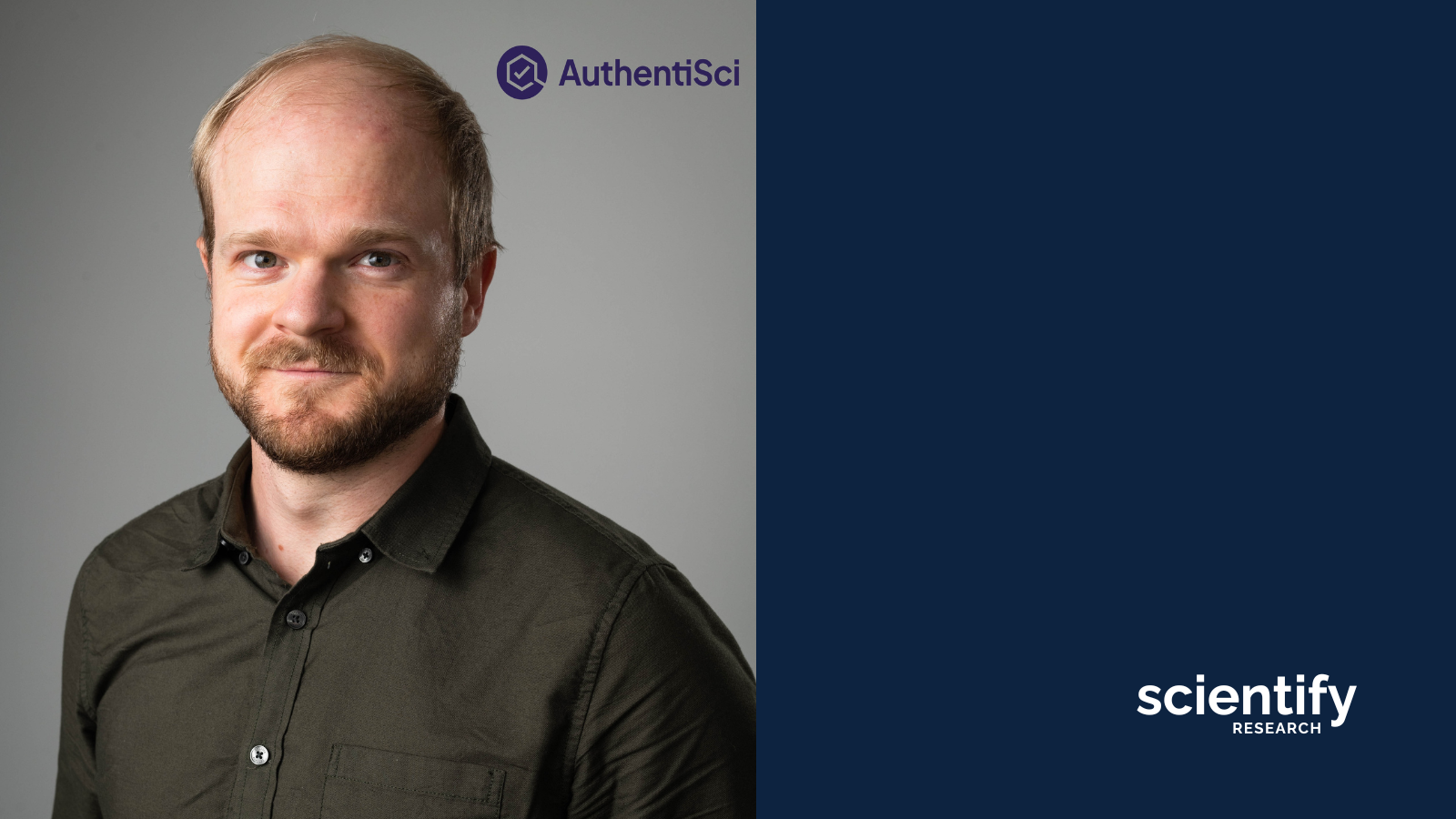
Preface: In this interview, we speak with Dr. Nicholas Clifton, Founder of AuthentiSci, a UK-based non-profit that “empowers scientists to safeguard scientific integrity across the web.”
What is the mission and vision of AuthentiSci?
AuthentiSci exists to improve public-facing science communication and reduce the impact of misinformation. We place expert voices alongside media content to guide readers around important topics including health, environment and tech. Our goal is to create a more transparent, accountable and trustworthy science media environment.
What motivates you to address misinformation?
If you work in research, you have probably seen your field misrepresented in the media. It happens often, across every format. Climate science spun out of context, exaggerated medical discoveries, correlation presented as causation. Misinformation is a leading global risk, breeds confusion and erodes trust in science. It reduces vaccine uptake, stalls policy change, and divides societies. International public surveys like the Edelman Trust Barometer show that scientists remain among the most trusted professionals.
This presents a huge opportunity to build on that trust, but scientists typically lack the platform to have broad public impact. We want to unlock that trust, make it easy for researchers to share what they know, and push back against the post-factual era.
Tell us more about your academic background and how your background contributes to the direction of AuthentiSci.
I’ve worked in neuroscience for 15 years, studying the biology underlying major psychiatric disorders. These are severely debilitating conditions affecting a large proportion of people worldwide, but they are so often misunderstood.
Misleading narratives mean mental health issues continue to be heavily stigmatised. Associated concepts like genetic risk are often taken out of context and overstated. Good science communication combines evidence, context, uncertainty, empathy and clarity.
That thinking has shaped AuthentiSci from the beginning. The platform is designed to help scientists present the full picture. We want to enable a dialogue between science and society, because understanding public concerns and questions is essential for building trust.
Are there other organizations like AuthentiSci that have attempted to solve related misinformation challenges?
There are some fantastic organisations working in this space. Groups like the Science Media Centre play a vital role in connecting journalists with experts and improving the quality of science reporting at its source. Their rapid response model has guided coverage across all areas of science, from mitigating vaccine myths to de-escalating GM food scares.
Others like Full Fact and Reuters Fact Check focus on pre-empting misinformation or fact-checking specific claims in depth. AuthentiSci is designed to complement these approaches by providing visible, post-publication expert insight alongside media content.
With so much content out there, readers struggle to distinguish strong evidence from sensationalism or misinformation. We focus on creating a scalable layer of scientific context that sits where public conversations are already happening.
But this is not just about correcting mistakes. A big part of what we do is about reinforcing what good science reporting looks like. Quality journalism should be visible, recognised and supported.
Practically speaking, how can researchers get involved with your initiative and what is the benefit to them?
Getting involved is simple. Register with your ORCID ID at AuthentiSci.com, select media in your area and add short reviews focused on evidence, balance and clarity. So long as you’ve published at least one peer-reviewed paper, you can contribute. We want to make public engagement accessible.
Many researchers care deeply about science communication but do not have the time, confidence, or platform to engage publicly on a regular basis. Not everyone wants to become a public-facing science communicator, appear on podcasts, or build a social media following. AuthentiSci lowers the barrier to engagement. We notify reviewers of new media content and invite them to contribute quick, meaningful feedback which forms part of a broader expert consensus.
At the same time, contributors build a visible record of public engagement and help to shape how their field is understood. It is a simple way to have real public impact and to get recognition for it.
In a perfect world, how do you see AuthentiSci positioned for real world impact?
A united scientific community whose collective voice helps hold science reporting to account across languages, disciplines and media formats. An expert-driven feedback system that rewards and foregrounds quality journalism, flags misleading content and helps maintain trust in science. We want readers to have an accessible way to immediately see what the evidence shows, how strong it is, and where the scientific consensus lies.
We see AuthentiSci working closely with media outlets, science communicators and fact-checking organisations to strengthen the wider information ecosystem. Our goal is not to police journalism, but to improve transparency around science reporting through visible expert insight and constructive feedback. Scientists have a real chance to push back against the growth of misinformation. AuthentiSci exists to help make that possible.
Acknowledgments:
We would like to thank Dr. Nicholas Clifton for sharing more about the vision of AuthentiSci, and we wish them much success in the endeavor to challenge online misinformation and upholding the integrity of science.