
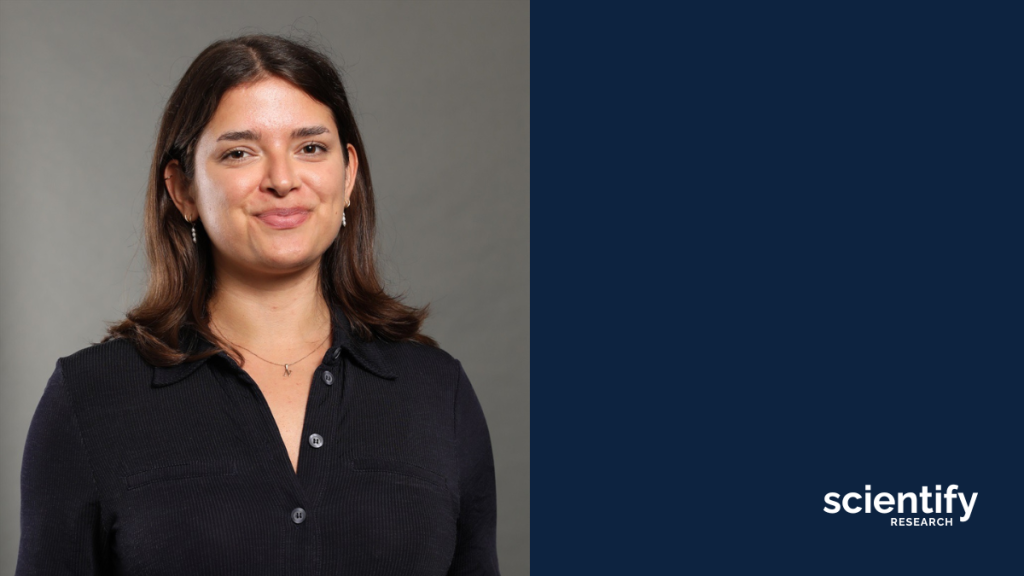
Preface: In this interview, we speak with Noëlle, a final-year PhD student at Lund University in Sweden specialising in Alzheimer’s disease and neurodegeneration. Originally from the Netherlands, she shares what it’s really like to pursue a funded PhD abroad, from finding open positions and reaching out to supervisors, to navigating travel grants, language barriers and the unique culture of Swedish academia.
Can you tell us a bit about yourself and your academic journey? What led you from the Netherlands to pursuing a PhD in neuroscience in Sweden?
I didn’t start out as a neuroscientist! My bachelor’s was in Liberal Arts & Sciences at Tilburg University, where the first year covered all kinds of disciplines before you chose a major. My interest in how the brain works became pretty apparent that year, so I ended up choosing cognitive neuroscience.
After that, I did the Cognitive and Clinical Neuroscience master’s at Maastricht University, specialising in Drug Development and Neurohealth, with the entire second year dedicated to independent research. By then I knew I wanted to work on neurodegenerative disorders and with human data. I ended up at the BarcelonaBeta Brain Research Centre, which focuses on healthy individuals at increased Alzheimer’s risk due to family history, and really enjoyed my experience there.
During my time there, I came across research from my current group, felt like it was exactly what I was looking for, and emailed my now-supervisor. One thing led to another, and that’s how I ended up in Sweden.
One of the most common questions we see from international researchers is: “Is a PhD in Sweden really paid?” Can you explain how the employment model works and does it apply equally to students coming from outside the EU?
Yes, a PhD in Sweden really is paid. I’m employed at Lund University and earn a monthly salary as a University employee. The same rules apply if you’re from outside the EU, you’ll fall under the same employment rules, but this may vary per University and faculty.
Walk us through the application process for a PhD position in Sweden. How is it different from applying to a PhD programme in other countries? How do you actually find open positions?
There are basically three ways to go about it. The first would be to start out in the lab as a research assistant, which is the most common, and then proceed to a PhD later if both you and the supervisor like how things are going (and if there is funding). The second would be to apply to an open PhD position.
I’ve seen a lot of positions advertised on LinkedIn. In the Netherlands, there is this website “academictransfer”, that’s where I also used to look for PhD programs in the Netherlands, as I actually haven’t looked around in Sweden much myself. The third would be to send an email, see if there is any potential and funding for a PhD, and land a position that way.
Before applying, did you reach out to potential supervisors? How important is that step, and how do you recommend approaching a PI you don’t know?
Reaching out beforehand makes you stand out and makes potential supervisors remember you. In my first email to my now-supervisor, I shortly introduced myself, explained what I was looking for and interested in, why I thought the group would be a good fit, and attached my resume. I also emailed a few other PIs when I was exploring my options.
Don’t get discouraged if you don’t hear back, PIs are super busy, and not receiving a reply doesn’t mean you’re not a good candidate.
Many researchers wonder whether it’s possible to switch fields when applying for a PhD abroad. For example, moving from a chemistry or biology background into neuroscience. Was there a transition in your own path, and what’s your advice for researchers considering a similar move?
Switching fields is definitely possible. I can’t speak from personal experience as I stayed within neuroscience, but I have a few colleagues with different backgrounds like biologists or engineers, doing neuroscience PhDs. It depends on the project, but it’s definitely possible. Anything can be learned, and if you can show that you pick new things up quickly, just try and apply!
Do you need to speak Swedish to do a PhD in Sweden? And more broadly, what surprised you most about adapting to life and academia in Sweden when you moved from the Netherlands?
You don’t need to speak Swedish, most of my colleagues don’t and get along fine, especially in academic environments where English is commonly spoken. I did end up learning it because I like learning languages, and needed it for one of my projects. What surprised me most about Swedish academia is the lack of hierarchy.
In the Netherlands there’s usually a clear sense that your boss has more authority. In Sweden, everyone is equal. Bachelor interns are treated the same way as assistant professors, which I think is very nice! It creates a more relaxed environment.
Neuroscience PhD programmes can be intense. How do you experience work-life balance in the Swedish academic system and how does it compare to what you’d heard or expected before arriving?
I expected it’d be stressful. What surprises me is how much it varies. Some weeks are very intense, whereas others are way more relaxed and not stressful at all. Work-life balance is genuinely tricky when the project is yours, as there is no one else to blame but you if the project stalls.
However, work-life balance is very much promoted in the Swedish academic system, with paid days off, reimbursement for health activities, and a “health hour” every week you can take to go exercise. Fika breaks, short coffee breaks, are also part of the Swedish work culture!
You’ve had experience with travel grants during your PhD. Can you walk us through how that works, what kinds of grants are available, how to apply, and what it means practically for a PhD student’s career?
Whenever I want to attend a conference abroad, I need to have funding for that. There’s often the option to apply for a fellowship from the conference itself, which I’ve gotten once. Otherwise, there are a few travel grants available at my University that I’ve successfully applied for. For my internship during my masters, I also applied for the Erasmus+ grant. The application process depends on the grant, but usually involves a short project description. It’s a great way to get experience with applying for grants!
Your research focuses on Alzheimer’s and dementia, a field that’s both scientifically complex and deeply human. What drew you to this area, and what does a typical week of research actually look like for you?
To this day, we still don’t know why certain proteins are becoming abnormal in the brains of people with Alzheimer’s disease, but they end up harming the brain and causing healthy cells to die off, which leads to memory loss. Our memories make us who we are, which makes it an incredibly devastating disease.
Yet, our brains are capable of so much. I really think we’ll be able to cure it one day. What drew me to the dementia field is exactly this combination of gaining an understanding about brain health as we age, as well as the burden dementia places on society. A typical work week for me depends a lot on what stage my current project is in.
As I’m graduating in about a year, I’m working on several projects at the same time. A typical week will include doing data analysis, putting together results and discussing that with my supervisor, attending journal clubs, working on a manuscript for a publication, and reading new publications.
For someone reading this who’s seriously considering applying for a PhD in Europe or Sweden, what’s the one thing you wish someone had told you before you started the process?
Your PhD topic will probably be different than you imagined when starting, which is completely normal. Make sure it still fits your interests though! Be honest with your supervisor, and with yourself, about what sparks your curiosity, and don’t be afraid to stand up for yourself if you end up doing projects you don’t enjoy.
Acknowledgments:
We’d like to thank Noelle for sharing her experience so openly. If you’re considering a PhD in Europe and want to explore funding opportunities that could support your journey, browse our database at ScientifyResearch.
