
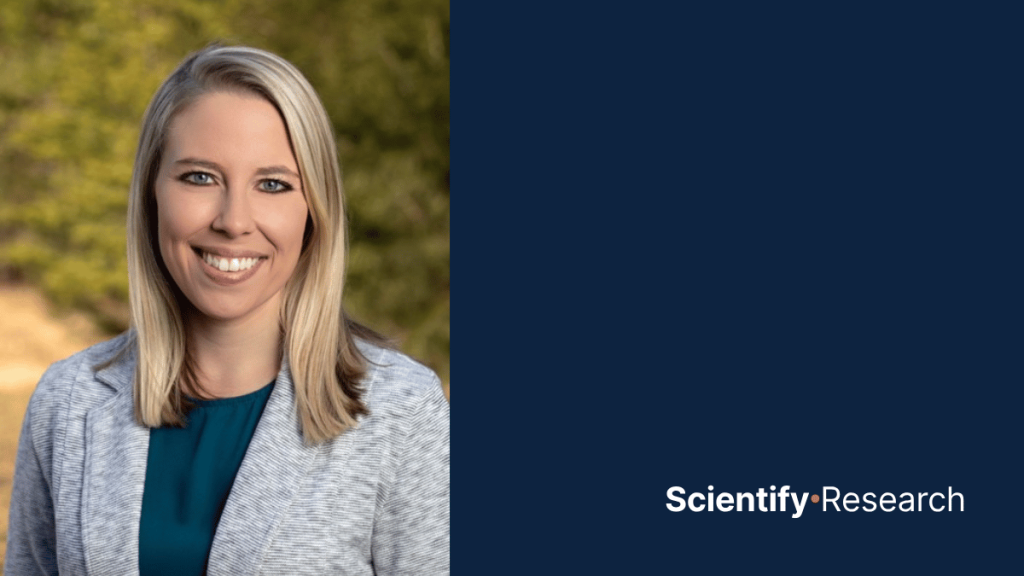
Preface: In this interview we speak with Dr. Paisley Myers, Vice President of Scientific Affairs at CureSearch. Here she shares how they fund and support research in pediatric oncology that has real promise to move toward the clinical trial phase and make a material difference in the lives of children living with cancer.
Tell us more about the founding and history of CureSearch, as well as its primary goals as a foundation.
CureSearch has a long history in pediatric cancer research, including deep roots in supporting the Children’s Oncology Group (COG). Today, our work is focused on a specific challenge: too many promising discoveries never make it from the laboratory to the children who need them. Since becoming an independent research-funding organization in 2012, we’ve invested more than $29 million in 50 research awards across 35 institutions, supporting research in more than 20 types of pediatric cancer.
Our goal is to end childhood cancer by driving targeted and innovative research with measurable results in an accelerated time frame. We identify promising science with the potential to become new treatments for kids and provide funding to advance that work through both preclinical and clinical development. We focus particularly on the critical gaps where traditional funding and drug-development models can leave promising pediatric cancer therapies behind.
What is your expertise and role with CureSearch?
I’m the Vice President of Scientific Affairs at CureSearch, where I oversee our research strategy and funding portfolio, including our research award programs, review process, and engagement with the scientific and drug-development experts who help evaluate projects for funding.
My background is in bioanalytical chemistry, and before joining CureSearch in 2024, I spent more than a decade working across academic research, biotechnology, and clinical research. That experience gives me a broad perspective across the research continuum and informs my work to ensure CureSearch is investing strategically in research with the potential to make a meaningful difference for children with cancer.
Could you tell us about the thinking behind CureSearch’s Acceleration Initiative Award and the role it plays within your broader research funding strategy?
There is a particularly difficult point in drug development between a promising discovery and a clinical trial. Researchers may have compelling data and a potential new therapy, but still need significant additional work to demonstrate efficacy, address manufacturing or regulatory requirements, and generate the evidence necessary to enter the clinic.
The Acceleration Initiative Award was designed specifically for that gap. It provides substantial, milestone-driven funding for promising preclinical projects that have a realistic path to clinical trials. Within our broader research strategy, it sits between our Young Investigator Award, which supports emerging researchers and earlier translational work, and our Catapult Award, which supports therapies that are already clinic-ready or in early clinical development.
The Acceleration Initiative Award supports innovative, evidence-based, translational and preclinical research with the potential to significantly improve therapeutic options for children with cancer. What makes a project “ready for acceleration” in your view?
We consider a project ready for acceleration when there’s already strong science behind it and a clear opportunity to build on that foundation. We’re looking for approaches that address an important unmet need and are far enough along that we can see a realistic path to a clinical trial within about three years, which aligns with the length of the award.
There may still be important work to do, such as additional efficacy or safety studies, manufacturing, regulatory planning, or other development steps, but there should be a clear understanding of what those remaining steps are and how to address them. Ultimately, we’re looking for projects where our funding can help overcome those final barriers and move a promising therapy into the clinic.
How do you identify the areas of pediatric cancer where investment could have the greatest potential to change treatment options for children in the near term?
For us, unmet need can mean a few different things. It may be a cancer where survival remains very poor or where there are few effective treatment options, but it can also mean a disease where children are surviving at higher rates but are left with significant long-term effects from treatment. We also consider cancers where there are particular challenges to developing new therapies or where certain patient populations have historically had fewer options.
We don’t limit our funding to specific cancer types. Instead, we look at the unmet need within each disease and ask whether the proposed research has the potential to meaningfully address it and ultimately change treatment options for children.
Could you tell us about the role of CureSearch’s Scientific Review Committee and the wider drug-development ecosystem, including scientists, oncologists and industry experts, in evaluating applications?
One of the things that distinguishes our approach is that projects are evaluated through both a scientific and a drug-development lens. We know that promising science can only get so far on its own, and that there also has to be a realistic path for turning that science into a treatment for children.
Our Scientific Review Committee brings together experts with deep knowledge of the specific science and disease area to rigorously evaluate each proposal. Projects then move to our Industry Advisory Council, which brings expertise from biotechnology, pharmaceutical development, and clinical research to assess the path forward, including clinical development, regulatory requirements, manufacturing, and commercialization.
Our Scientific Advisory Council then considers all of that information together: the strength of the science, the unmet need, the potential impact for patients, and the drug-development considerations identified by the IAC, to help us prioritize the projects with the greatest potential.
Bringing those perspectives together allows us to ask not only, “Is this excellent science?” but also, “Does it have a credible path to becoming a treatment?”
CureSearch places a strong emphasis on moving promising research out of the laboratory and toward clinical trials. What does a successful translational pathway look like from your perspective?
The path from the lab to a clinical trial is rarely straightforward. There are a lot of challenges that can come up along the way, from generating the right scientific evidence to navigating manufacturing, regulatory requirements, and funding. Part of the process is knowing what those barriers are and having a plan to work through them.
For us, a successful path is one where a project continues building the evidence and support it needs to reach a clinical trial. By the end of our funding, we want to see that project either entering the clinic or well positioned to get there, with a clear plan for how it can continue moving forward.
Could you share an example of a past Acceleration Initiative Award project that illustrates the kind of journey you hope to support?
Dr. Joshua Breunig’s work is a great example of the impact of our Acceleration Initiative Award. CureSearch funded his team at Cedars-Sinai to develop a new therapeutic approach for pediatric high-grade gliomas with the H3 G34 mutation, an aggressive brain cancer with extremely limited treatment options.
His team identified a metabolic vulnerability in these tumors and developed a strategy using ADI-PEG20, an existing drug that could potentially be repurposed for these children. CureSearch funding supported the preclinical work needed to build the evidence for bringing that strategy into the clinic.
The project has since progressed to a clinical trial through the Pediatric Neuro-Oncology Consortium (PNOC). That journey, from identifying a promising vulnerability, to building the evidence behind a new treatment strategy, to bringing it into a clinical trial, is exactly what the Acceleration Initiative is designed to support.
Ultimately, CureSearch’s research funding is intended to improve outcomes for children with cancer. How does the perspective of patients and families inform the research areas and projects that you choose to support?
Patients and families are ultimately the reason we do this work, and their needs are reflected in how we define impact. Survival is obviously critical, but families also care deeply about toxicity, quality of life, long-term health, and having meaningful options when current treatments fail.
That’s why we look beyond scientific novelty when evaluating projects. We ask what a new therapy could actually mean for children: Could it improve survival? Provide an option where none exists today? Reduce the burden of treatment or its long-term effects? Keeping those questions at the center helps ensure that our research strategy remains focused on outcomes that matter to children and families.
Looking ahead, what would success for the Acceleration Initiative look like five years from now, and what would you hope has changed for children and families as a result of the research CureSearch is funding today?
Five years from now, I’d like to see more of the therapies we’re funding today in clinical trials and ultimately continuing toward approval and availability for children. We already have encouraging evidence that this model can work: five of the seven Acceleration Initiative projects that have progressed far enough to assess have reached clinical trials.
But the larger goal is to make the path from discovery to patient faster and more successful. Success would mean that fewer promising pediatric cancer therapies stall simply because they lack the funding, expertise, or development support needed at a critical stage, and that children have more effective, less toxic treatment options as a result.
Acknowledgements
We sincerely thank Dr. Myers for taking the time to tell us more about CureSearch’s funding program and how their Acceleration Initiative Award aims to move promising research into the clinic. We appreciate their commitment to the important work of building successful translational pathways for treatments that will make a difference in the lives of children living with cancer.