Should a compelling science story per definition have an end? For generations, the scientific ideal was to deliver a definitive conclusion, to close the book on a problem, as stories should have a beginning, a middle, and an end. But as the challenges to effectively communicate science become more intricate, could it be that a more powerful story is not the one that ends, but one that begins?
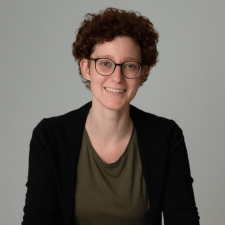
Are researchers effectively trained to tell compelling science stories? Our keynote speaker, Hedwig Ens, will explore what makes a compelling science story.
During this webinar, you will also hear 3-minute talks from our 5 finalists of the Rare Disease Advances Science Communication Award. This year, we have a people’s choice award, so the attendees will be able to vote for their favorite science talk! Lastly, we will reveal the winner our 2nd annual science communication award, sponsored by Karger Foundation and Lipotype.
The five finalists:
- Krabbe disease: Whispers of Hidden Suffering in the Mountains of Swat Valley by Dr. Muhammad Ilyas from Islamia College University Peshawar, Pakistan
- A Hidden Block: How a Rare Heart Malformation Went Undetected for Decades by Dr. Abdi Dandena Dibaba from Jimma University, Ethiopia
- From Gene to Vision: Narratives of Sight, Loss and Hope by Mariam Ibrahim from Beirut Arab University, Lebanon, now with with the Faculty of Health Sciences, Collegium Medicum, Nicolaus Copernicus University in Bydgoszcz, Poland
- The Work of Gene Hunters – How to Identify and Characterize a New Disease by Dr. Bernhard Ransmayr from Medical University of Vienna, Austria; currently postdoctoral fellow at the Department of Clinical Pharmacology, Ludwig-Maximilian University Munich, Germany
- From Scattered Files to Shared Knowledge: Brazil’s Rare Disease Registry Breakthrough by Dr. Filipe Bernardi from Ribeirão Preto Medical School, University of São Paulo, Brazil and Faculty of Medicine, University of Porto, Portugal
At ScientifyResearch, each year we host a science communication award to support researchers with science communication skills. This year, we are pleased to support the rare disease research community. Join this celebration of science communication!
Who should attend?
Science communication enthusiasts and researchers at all career stages, from all disciplines and locations who want to sharpen their science communication skills!
Everyone with an interest in learning about science communication and interested to hear from our essay finalists of the Rare Disease Advances Science Communication Award.
When: Wednesday, May 27, 2026 at 2:00-3:00 PM Central European Summer Time (CEST)